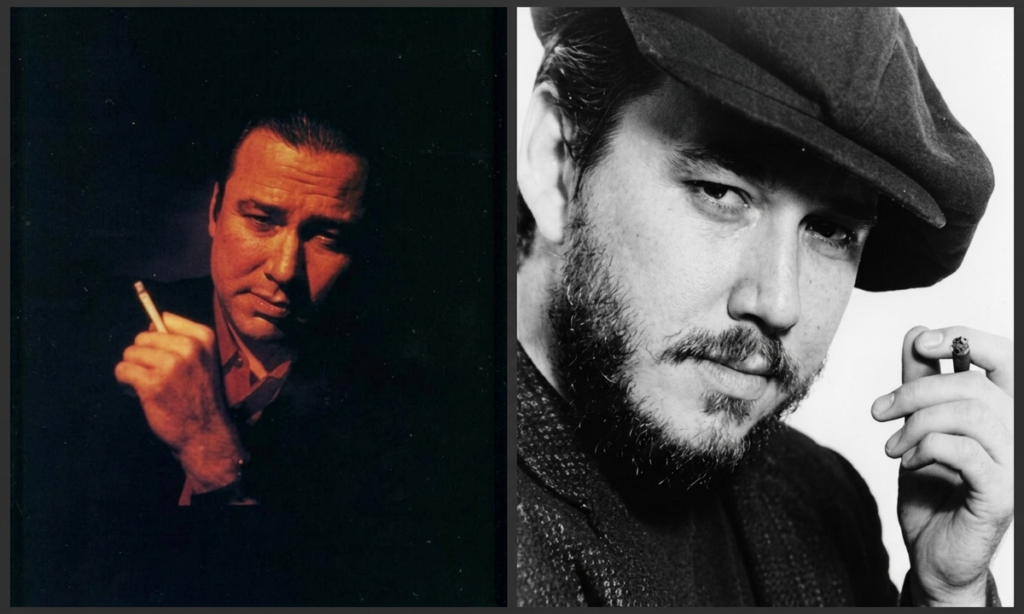

William Melvin Hicks died at 32, but by then he had already built a reputation as one of the most uncompromising comedians of his generation. Born in Valdosta, Georgia, in 1961, Hicks developed his distinctive voice in Houston’s comedy scene and eventually took his ideas to national television, HBO, and audiences in Britain. His career was brief, but the questions he raised about politics, religion, consumer culture, and free expression continued to shape discussions about comedy long after his death.
Who Was William Melvin Hicks?
William Melvin Hicks was the birth name of American comedian Bill Hicks, born on 16 December 1961 in Valdosta, Georgia.
His family moved several times during his childhood because of his father’s career as a General Motors executive. The family eventually settled in Houston, Texas, when Hicks was seven. His mother, Mary, taught, while his father, Jim, worked in the automotive industry. Hicks also had an older brother, Steve, and an older sister, Lynn.
Houston became the setting for his interest in comedy. As a teenager, Hicks began writing jokes, studying comedians, and performing in local venues.
By the age of 16, he was performing at the Comedy Workshop in Houston, putting him on a path that would eventually become his full-time profession.
Early Influences and Family Background
Hicks was raised in a Southern Baptist household, an environment that later became an important source of material for his comedy.
William Melvin‘s upbringing exposed him to religious traditions and conventional ideas about American life, while his teenage interests increasingly moved toward questioning those assumptions.
According to biographical accounts, Hicks was influenced by performers including Woody Allen and Richard Pryor. He began developing jokes while still young and frequently tested his material with his brother and friends.
This early combination of traditional upbringing and rebellious curiosity became an important part of the persona audiences would eventually recognize.
The Houston Comedy Scene
Houston played a central role in Hicks’ development.
During the late 1970s and early 1980s, the city’s comedy community produced a generation of performers willing to experiment with darker, more confrontational material.
Hicks became associated with what was later described as the Texas “outlaw” comedy scene. Other comedians connected with this environment included Sam Kinison and Carl LaBove.
For Hicks, stand-up was more than a sequence of jokes. His performances increasingly became extended examinations of American culture, politics, religion, media, and personal freedom.
That approach helped distinguish him from comedians whose material depended primarily on traditional observational humor.
From Comedy Clubs to National Television
A major turning point came in 1984, when Hicks got the chance to appear on Late Night with David Letterman.
Jay Leno helped introduce Hicks to the program, giving the young comedian a national television platform. Hicks would go on to make numerous appearances on Letterman’s programs in the following years.
Television, however, presented a complicated opportunity.
Hicks’ club performances centered on material that could be provocative, explicit, and politically charged. Network television operated under different standards, meaning that some of his material had to be altered or avoided.
The tension between Hicks’ creative style and mainstream broadcasting became one of the defining stories of his career.
A Difficult Relationship With Mainstream Television
Hicks never seemed like an obvious fit for conventional network entertainment.
His comedy frequently challenged religious institutions, political rhetoric, advertising, consumerism, and American foreign policy. He also discussed drugs, censorship and cultural hypocrisy.
For supporters, this willingness to challenge established ideas was central to his appeal. Critics, meanwhile, could view his material as deliberately provocative or offensive.
The disagreement was not simply about individual jokes. It reflected a broader question about how far mainstream television could accommodate a comedian whose style depended on confronting audiences.
The Letterman Controversy
The most famous example came in 1993.
Hicks recorded a performance for The Late Show with David Letterman after Letterman had moved from NBC to CBS. Hicks had already appeared on Letterman’s programs many times, but this particular performance was removed before broadcast.
Contemporary reporting stated that the routine was cut after concerns about its subject matter, including references to religion and abortion politics. Hicks was reportedly angry and confused by the decision.
The incident became one of the best-known examples of the limits controversial comedians face on American television.
Years later, the episode took another turn. In 2009, Letterman aired Hicks’ previously unaired performance in its entirety and acknowledged responsibility for the earlier decision. Hicks’ mother, Mary, attended the broadcast.
The delayed broadcast gave the episode a second life, transforming what had once been a television censorship controversy into an important part of Hicks’ career history.
Drugs, Alcohol and a Change in Direction
Hicks’ early adult life was also marked by heavy drug and alcohol use.
His experiences with substance use became material for his comedy, but they eventually affected his professional and personal life. According to biographical accounts, he moved to New York in 1987 and began working toward sobriety the following year.
This period represented a major transition.
Rather than letting substance use define his career, Hicks increasingly focused on writing, touring, and developing longer-form material. His performances became more philosophical and political while retaining the aggressive comic delivery that audiences had come to expect.
His career also became increasingly international.
Breakthrough Years and International Recognition
The late 1980s and early 1990s were Hicks’ most productive period.
He toured extensively and performed hundreds of shows in some years. His first major video, Sane Man, was recorded in 1988, while his album Dangerous followed in 1990.
Television exposure expanded through HBO and other platforms.
His 1990 appearance at the Montreal Just for Laughs festival and his HBO special One Night Stand helped establish him as a performer who could reach audiences beyond the American club circuit.
Britain and Ireland became particularly important markets.
During his 1991 UK and Ireland tour, Hicks played sold-out shows and developed a strong following. He also received the Critics Award at the Edinburgh Festival, further strengthening his reputation internationally.
Why His Comedy Was Different
William Melvin’ material often moved beyond conventional punchlines.
A typical routine could begin with an everyday observation before expanding into questions about government, religion, advertising, war, or human behavior.
That structure allowed him to use comedy as a vehicle for social commentary.
His supporters viewed this as a strength because the performances encouraged audiences to question assumptions. Others found the material abrasive or excessively confrontational.
The disagreement itself became part of Hicks’ identity as a performer.
Health, Final Performances and Death
In 1993, William Melvin was diagnosed with pancreatic cancer.
The public did not widely know about the diagnosis during the final period of his career. Despite undergoing treatment, he continued performing and recording material.
His final years therefore combined professional momentum with a serious private health struggle.
Hicks died on 26 February 1994, in Little Rock, Arkansas, at the age of 32. Contemporary reports confirmed that the cause of death was pancreatic cancer.
His death came at a moment when his career was still developing.
He had achieved national recognition, built an international following, and begun receiving broader critical attention. Still, he had not reached the level of mainstream fame that many later audiences associated with him.
What Happened to His Work After His Death?
Hicks’ influence became more visible after his death.
Several recordings and collections were released posthumously, allowing new audiences to discover material that had not been widely available during his lifetime.
Posthumous releases included Arizona Bay and Rant in E Minor, recorded toward the end of his life and formally released in 1997. Later collections and video releases expanded his archive.
His legacy also benefited from changing media technology.
Comedy that once circulated mainly through live performances, albums, and television specials became increasingly accessible through home video and the internet.
That created an unusual second phase of Hicks’ career: one that occurred after his death.
The Documentary and Renewed Interest
Interest in Hicks continued decades after his passing.
The 2010 documentary American: The Bill Hicks Story revisited his life and career, introducing his story to audiences who hadn’t experienced his work in the early 1990s.
The documentary’s arrival demonstrated how his reputation had expanded beyond the comedy clubs and television appearances that originally made him known.
Journalists, critics, and fellow comedians have also examined his career, particularly in discussions of censorship, political satire, and the boundaries of stand-up.
Bill Hicks’ Lasting Cultural Significance
There is a distinction between being famous and being influential.
Hicks was not a conventional mainstream celebrity during his lifetime. His career did not revolve around sitcoms, blockbuster films, or long-running television programs.
Instead, his reputation developed around recorded performances, live touring and a distinctive body of ideas.
Several elements continue to define his legacy:
- Political and social satire: He regularly addressed politics, war, religion and consumer culture.
- Freedom of expression: The Letterman controversy became a lasting example of the conflict between artistic expression and broadcast standards.
- International appeal: His following in Britain and Ireland helped demonstrate that his style extended beyond American audiences.
- Posthumous influence: Recordings and documentaries introduced his work to generations who never saw him perform live.
- Philosophical comedy: His routines often used humor to explore broader questions about society and human behavior.
The Broader Legacy
Looking back at William Melvin Hicks’ career requires some historical perspective.
The media environment of the late 1980s and early 1990s was very different from today’s. Cable television was expanding, but comedians still depended heavily on clubs, albums, television specials, and late-night appearances to reach national audiences.
Hicks operated within that system while repeatedly testing its boundaries.
His career also illustrates how a comedian’s reputation can change after death. Contemporary coverage described him as controversial and unconventional, while later retrospectives increasingly examined his work as an important part of modern stand-up history.
That evolution does not mean every idea Hicks expressed has aged in the same way. Rather, it shows how his performances continue to invite discussion about comedy’s role in questioning cultural assumptions.
William Melvin Hicks: A Career Cut Short
William Melvin Hicks’ story ultimately remains one of an unusually short but productive creative career.
Born in Georgia and raised partly in Houston, he found his identity through stand-up comedy. He moved from small comedy clubs to national television, HBO specials, and international stages, while developing a style that refused to separate entertainment from social commentary.
His death at 32 prevented him from seeing how dramatically his work would be rediscovered.
Yet the continuing availability of his recordings, the later broadcast of his censored Letterman appearance, and documentaries about his life have ensured that his name remains part of conversations about modern comedy.
The lasting question surrounding Bill Hicks is therefore not simply how famous he might have become had he lived longer. It is how a performer with such a limited window of time managed to leave behind material that still generates debate decades later.
For William Melvin Hicks, comedy was never merely about getting a laugh. It was also a way of examining the culture around him. The fact that audiences continue to revisit those examinations suggests that his brief career still occupies a distinctive place in the history of American stand-up.