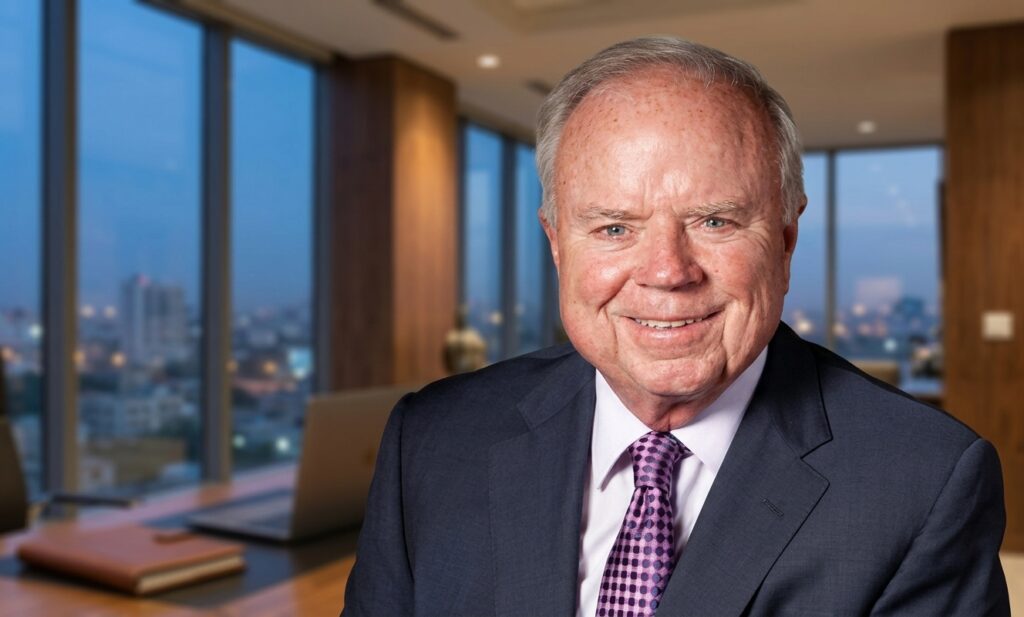

Scott Lutgert’s name has long been associated with the transformation of Naples, Florida, from a relatively small coastal community into one of America’s best-known luxury residential destinations. After arriving in Naples in 1969, Lutgert entered a developing real estate market and spent decades building properties, businesses, and institutions that became part of the region’s identity. In 2026, renewed recognition of his civic contributions and a new chapter for his family’s company have brought fresh attention to his career and legacy.
From Chicago to a Changing Naples
Scott Lutgert’s connection to Naples began when Southwest Florida looked dramatically different from the affluent destination it is today.
He moved to Naples in December 1969 after completing an MBA at the University of Chicago. At the time, Naples had a much smaller population and far less infrastructure than it would develop over the following decades.
The timing proved important.
Southwest Florida was entering a period of sustained population growth, tourism, and investment. Coastal property was becoming increasingly attractive to retirees, seasonal residents and investors, creating opportunities for developers who understood the area’s long-term potential.
Lutgert became one of those developers.
His professional career became closely linked with The Lutgert Companies, the family business founded by his father, Raymond L. Lutgert. Over time, the organization expanded across residential development, commercial properties, construction, real estate brokerage, and related services.
Building a family business
The Lutgert family entered real estate before Scott arrived in Naples.
Raymond Lutgert founded the company in 1964, establishing a business that would eventually become one of the recognizable names in Southwest Florida real estate.
Scott later assumed a major leadership role, helping expand the company’s reach as Naples developed.
Today, the business remains family-oriented, with the third generation increasingly involved in leadership. Scott Lutgert continues to serve as chairman, while younger executives have taken on more responsibility for the company’s day-to-day direction.
That generational transition matters because it shows how a family business can stay connected to its original identity while adapting to a dramatically different economic environment.
Park Shore and the Transformation of Naples
One of the most significant chapters of Scott Lutgertt’s career involved Park Shore.
The community became associated with luxury waterfront living and helped establish a development model that would influence Naples for decades. Companies connected with Lutgert developed numerous luxury beachfront high-rise buildings in the area.
Park Shore’s importance goes beyond the individual structures.
Its development reflected the increasing demand for high-end residences along Florida’s Gulf Coast. Waterfront condominiums, private amenities, and carefully planned neighborhoods became central features of Naples’ emerging identity.
For residents and investors, these developments offered a new type of coastal lifestyle. For the wider region, they contributed to growth in property values, construction activity, employment, and the local tax base.
At the same time, large-scale development inevitably raised questions about density, infrastructure and the long-term environmental consequences of coastal growth.
Those questions would become increasingly important as Southwest Florida’s population expanded.
Expansion beyond Naples
Scott Lutgert’s development interests were not restricted to one community.
His companies became involved with projects in other parts of Southwest Florida, including Bonita Bay, as well as developments outside Florida.
In North Carolina, the family became involved with Linville Ridge, a mountain community built around golf, residential properties, and private amenities.
The project demonstrated a broader approach to luxury development: rather than focusing exclusively on beachfront property, the company also explored communities centered on distinctive natural settings.
This strategy reflected changing consumer preferences among affluent buyers who increasingly sought private residential environments built around recreation, scenery, and lifestyle amenities.

Commercial Development Changes the Landscape
Lutgert’s influence also extended beyond residential real estate.
His companies became involved in commercial and mixed-use developments that helped shape the experience of North Naples and surrounding communities.
Projects associated with the company include The Village on Venetian Bay, The Promenade at Bonita Bay, Mercato, and various office developments.
These projects illustrate how Southwest Florida’s real estate market evolved.
Early growth was closely tied to residential construction. As communities grew, however, residents also needed places to shop, work, dine, and socialize.
Mixed-use destinations helped answer that demand.
Mercato and the mixed-use model
Mercato is a useful example of this evolution.
The North Naples development combines commercial, dining, entertainment, and residential components. Instead of treating housing and business activity as entirely separate categories, the development brings several functions together.
That model has become increasingly common in growing American communities.
For Southwest Florida, it also reflects the region’s changing demographics. A population made up of retirees, permanent residents, seasonal homeowners and visitors creates demand for more than traditional suburban neighborhoods.
However, development also creates challenges.
More residents and visitors mean greater pressure on roads, utilities and public services. Communities must balance economic growth with questions about congestion, environmental protection, and preserving local character.
Leadership Beyond Real Estate
Scott Lutgert’s public profile has gradually expanded beyond property development.
Education, healthcare and philanthropy have become important parts of his civic work.
He served for many years on the board of Florida Gulf Coast University and eventually became chairman of its Board of Trustees. His connection to the university reflects the growing importance of higher education in a region that has developed from a seasonal retirement destination into a more complex economic community.
The university itself has become part of Southwest Florida’s effort to build a stronger workforce and diversify its economy.
For Scott Lutgert, involvement in education represented a different form of community development.
Instead of building structures or neighborhoods, the focus shifted to institutions designed to prepare future generations.
Healthcare Becomes a Central Part of His Civic Role
Healthcare has become another major part of Lutgert’s legacy.
Scott Lutgert has held leadership responsibilities with NCH Healthcare System, one of the major healthcare institutions serving the Naples area.
His involvement is particularly relevant because Southwest Florida’s demographic changes have created growing healthcare demands.
The region has long attracted retirees, and an aging population naturally increases demand for hospitals, specialists, rehabilitation services, and other forms of medical care.
Healthcare leadership also presents challenges that differ sharply from real estate.
Hospitals must respond to staffing shortages, technological changes, rising costs, and increasing demand while maintaining quality and accessibility.
Lutgert’s role in healthcare therefore extends his involvement in the community.
The work is less visible than a high-rise condominium, but its consequences can be just as important to residents.
Philanthropy and the Naples Winter Wine Festival
Lutgert’s philanthropic activities have also contributed to his public reputation.
He helped found the Naples Winter Wine Festival, an event that has become one of the area’s most prominent charitable gatherings.
The festival raises money for organizations and programs serving vulnerable children in Collier County.
Its success demonstrates how Naples’ concentration of wealth can be converted into significant philanthropic resources.
The model is relatively distinctive. Rather than relying solely on traditional charity events, the festival combines food, wine, entertainment, and high-level fundraising to attract wealthy donors from across the country.
Over the years, the event has generated substantial funding for children’s causes.
Lutgert has also supported charitable and community organizations focused on children, families, and people experiencing hardship.
Philanthropy as community infrastructure
For wealthy communities, philanthropy can extend beyond individual donations.
Private contributions can help finance educational programs, healthcare initiatives, children’s services, museums and social organizations that might otherwise struggle to expand.
At the same time, philanthropy does not replace the responsibilities of government or public institutions.
Instead, it operates alongside them.
Lutgert’s career illustrates how business leadership and philanthropy can become interconnected in a community where private wealth significantly influences civic life.
Recognition in 2026
In 2026, Lutgert received the Naples Daily News Outstanding Citizen of the Year recognition, highlighting his decades of business and civic involvement.
The timing is notable.
The recognition comes more than five decades after he arrived in Naples, allowing his career to be viewed against the backdrop of the region’s enormous transformation.
The Naples of 1969 and the Naples of 2026 are vastly different communities.
Population growth, luxury development, tourism, healthcare expansion, and changing demographics have reshaped the area.
Lutgert has been involved in many of those changes, making his career a useful case study in how private developers can shape a region’s evolution.
A New Generation Takes the Lead
The Lutgert Companies are also entering a new phase.
In 2026, longtime executive Howard Gutman announced his retirement as president and chief executive officer after decades with the company. He is expected to remain involved in an advisory and leadership capacity.
Meanwhile, the company’s next generation has taken on increasingly important executive positions.
Scott Lutgert remains chairperson, while younger leaders are positioned to guide the organization into its next stage.
This transition matters because family businesses face a unique challenge: preserving institutional knowledge while avoiding dependence on the methods and assumptions of an earlier era.
The real estate market of the future will not necessarily resemble the market Lutgert entered in 1969.
The Complexities of Growth
Lutgert’s legacy cannot be examined without considering the broader debate surrounding Southwest Florida’s development.
Supporters point to economic opportunity, job creation, community investment, and philanthropy.
Critics of rapid development in the region have raised concerns about traffic, housing affordability, environmental pressure, infrastructure, and the loss of some characteristics associated with older Naples.
Those debates cannot be attributed to one developer.
Southwest Florida’s transformation has involved countless developers, investors, public officials, businesses and consumers.
Nevertheless, Lutgert’s career provides an unusually clear window into the process because his professional life has unfolded alongside the region’s transformation.
The buildings and communities connected to his companies are part of the physical record of Naples’ growth, while his later civic work reflects the institutions needed to support that growth.
What Comes Next?
The immediate future for the Lutgert Companies will likely emphasize continuity alongside generational change.
The organization has younger executives in leadership positions while Scott Lutgert remains chairman, providing decades of experience during the transition.
The larger question concerns how the company will respond to a Southwest Florida that faces challenges very different from those of the 1970s and 1980s.
Among the most important issues are:
- Increasing population density
- Infrastructure and transportation demands
- Rising housing costs
- Environmental concerns
- Climate and coastal risks
- Demand for healthcare services
- Changing expectations surrounding sustainable development
These issues could influence both the type and location of future development.
Luxury real estate is likely to remain an important part of Naples’ economy, but developers may increasingly have to balance market demand with community concerns.
A Legacy Still Being Written
Scott Lutgert’s story is ultimately inseparable from the story of modern Naples.
He arrived when the community was comparatively small and helped build a family business during a period of extraordinary regional growth. His career has included luxury residential communities, commercial destinations and major real estate developments.
But his influence has not stopped at property.
Education, healthcare and philanthropy have become equally important elements of his public legacy.
That combination makes Lutgert’s career particularly revealing. It shows how a business leader can connect not only to a community’s physical appearance but also to the institutions that support the people who live there.
Now, as a new generation prepares to guide the family business, the next chapter may be less about expanding Naples and more about adapting to what its growth has created.
The central question is no longer simply how Southwest Florida will develop, but what kind of community it wants to become—and how much of the legacy built over the past half-century will shape that future.