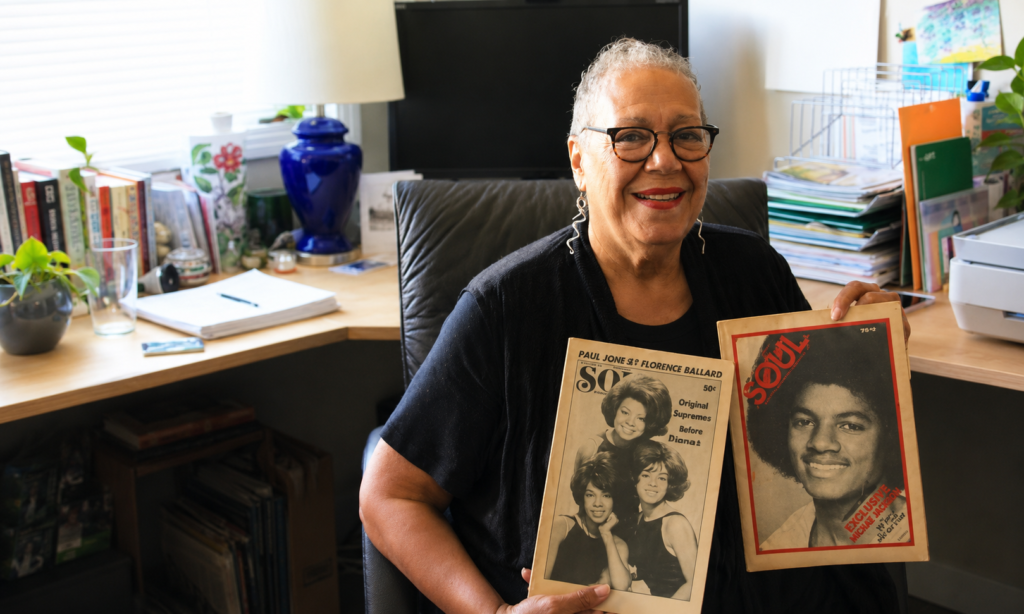

Regina Jones spent much of her career behind the scenes of the American entertainment industry, building a publication that gave Black musicians and their communities a place in the national conversation. As the co-founder and publisher of SOUL magazine, she helped shape an important chapter in Black music journalism. Decades later, a documentary is drawing renewed attention to her life and work and introducing her story to a new generation.
Her journey matters not only because of the artists she covered, but also because she navigated barriers as a Black woman working in media during a period of profound social change.
Who Is Regina Jones?
Regina Jones, born Regina Nickerson on September 23, 1942, grew up in South Los Angeles, California. She became known as a publisher, writer, editor, and public relations professional whose work connected Black musicians with audiences across the United States.
Her best-known achievement was helping establish SOUL, a publication devoted to Black entertainment and music. She founded the magazine with her then
-husband, Ken Jones, and it grew from a small Los Angeles publication into a nationally recognized voice covering prominent Black artists.
Regina Jones’s career also extended beyond publishing. She later worked in the music industry’s public relations sector, including a leadership role at SOLAR Records, before establishing her own public relations firm.
Her story offers a perspective on the relationship between journalism, music, race, and entrepreneurship in the second half of the twentieth century.
Early Life and the Road to Publishing
Growing Up in South Los Angeles
Jones grew up in a community whose experiences would later influence her professional priorities. South Los Angeles was an important center of Black culture, community life, and political activity, but Black residents frequently encountered discrimination and unequal representation in mainstream institutions.
Although detailed public information about every aspect of Jones’s childhood and education remains limited, her later career demonstrates a strong understanding of the importance of representation. She recognized that Black musicians’ and communities’ stories deserved dedicated coverage rather than occasional attention from publications whose priorities lay elsewhere.
Jones married Ken Jones at 15. Early family responsibilities meant her professional journey unfolded alongside the demands of raising children and managing a household.
These circumstances form an important part of her story. Her career did not begin with the advantages typically associated with established media executives. Instead, she developed her professional identity while navigating significant personal and economic responsibilities.
Working as a Police Dispatcher
Before becoming a publisher, Jones worked as a dispatcher for the Los Angeles Police Department.
That job placed her in a position to hear reports of emergencies and community tensions as they unfolded. In 1965, she encountered distress calls connected to the Watts uprising, a major episode of unrest in Los Angeles that exposed deep divisions over policing, discrimination, poverty, and racial inequality.
The events left a lasting impression on her. Watching the crisis unfold and considering the conditions affecting Black communities helped shape the direction she and her husband would take.
Rather than treating the unrest as an isolated event, they began thinking about what they could contribute to their community. Their answer would become a publication centered on Black music, artists, and cultural identity.
The Creation of SOUL Magazine
Building a Publication With a Distinct Purpose
In 1966, Regina and Ken Jones launched SOUL as a modest, newspaper-style publication. Its central idea was straightforward: Black artists deserved sustained, informed coverage, and Black readers deserved a publication that reflected their interests and experiences.
The magazine emerged during a period of rapid change in American music. Soul music was reaching larger audiences, Motown was becoming an influential cultural force, and Black musicians were shaping popular entertainment. Yet visibility in the music industry did not always translate into fair representation throughout the wider media landscape.
SOUL addressed that gap by focusing on Black performers and the communities around them.
The publication covered major figures in music, including Aretha Franklin, James Brown, Diana Ross, Gladys Knight, and Stevie Wonder. Its coverage helped document artists whose influence extended well beyond the charts.
Why the Magazine Mattered
SOUL mattered beyond celebrity profiles and entertainment news. A publication devoted to Black music could examine artists on their own terms, document industry developments, and connect entertainment to broader questions of identity and opportunity.
For readers, the magazine offered recognition. For musicians, it gave their work and careers a platform to reach audiences interested in Black culture.
Its approach also reflected a broader tradition of Black-owned media in the United States. Newspapers and magazines had long served communities whose experiences mainstream outlets often overlooked or distorted. SOUL brought that tradition into the rapidly expanding world of popular music.
Jones’s role as publisher and editor-in-chief was particularly notable in an industry where leadership positions were not equally accessible to women, especially Black women.
Her work required more than editorial judgment. Publishing a magazine also meant managing deadlines, coordinating contributors, attracting readers, maintaining commercial relationships, and keeping the publication operating.
SOUL’s success therefore represented both a cultural achievement and a business accomplishment.
A Growing Profile in the Music Industry
Expanding Beyond Los Angeles
As SOUL gained recognition, Jones and her husband pursued additional publishing ambitions. In 1978, they launched The Los Angeles Spirit, a weekly publication focused on Black communities in Los Angeles.
The newspaper reportedly printed approximately 15,000 copies within its first 12 weeks. Despite that promising early circulation, it closed within a year, illustrating the difficulties of sustaining independent publications in a competitive media environment.
The experience showed a challenge familiar to many publishers: a publication can attract interest and still struggle to build a financially sustainable business.
Meanwhile, SOUL continued building its reputation. Its coverage of prominent performers and developments in Black music made it an important reference point for audiences following the industry during the 1960s and 1970s.
In 1980, Regina Jones received the NAACP Image Award for Outstanding Woman in Business, recognition of her achievements and professional standing.
The End of SOUL
The magazine eventually ceased publication in 1982.
Its closure marked the end of a significant chapter in Regina Jones’s career, but it did not erase the publication’s contribution to music journalism. The issues produced during its years of operation remained a historical record of Black entertainment and the artists who helped define it.
The magazine’s history also illustrates independent media’s vulnerability. Publications serving specialized audiences can wield considerable cultural influence while facing financial pressures, shifting advertising markets, and the practical challenges of staying competitive.
The closure should therefore be understood in the broader context of publishing, not as a simple measure of the magazine’s cultural value.
May you also read :Elaine Starchuk