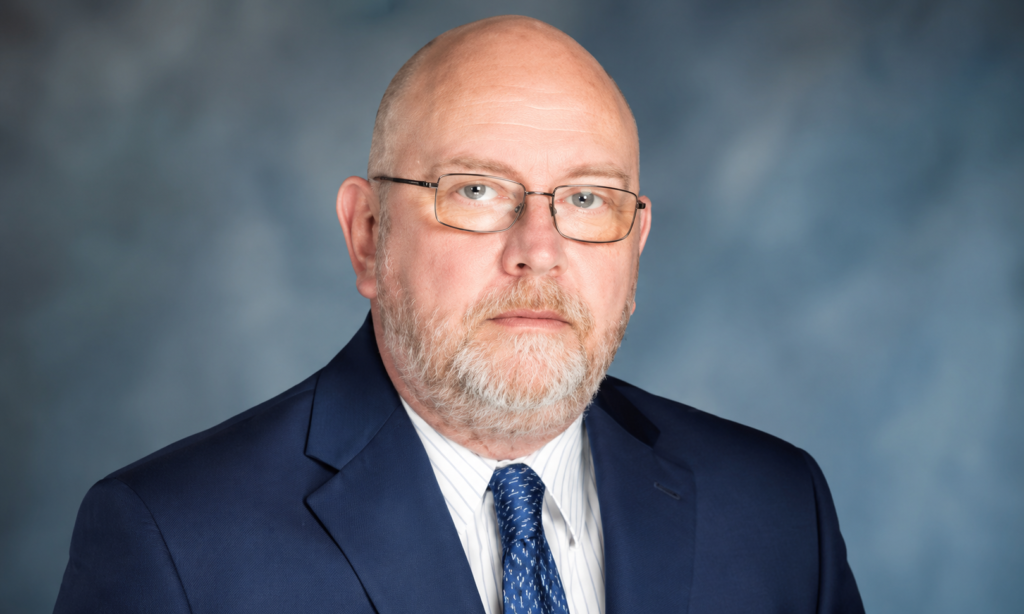

Paul Patrow is not a household name, but his career sits close to some of the most consequential financial transactions in modern business. A tax lawyer with experience at major U.S. law firms, Patrow has advised private equity sponsors, investment funds, and companies on the complicated tax structures behind acquisitions, financing, and investment.
His more recent work has also placed him in the emerging world of artificial intelligence and legal technology. That combination makes Paul Patrow’s professional story worth examining. It reflects a broader shift in the legal industry: experienced lawyers are increasingly moving beyond traditional legal practice to help develop technology designed to automate parts of sophisticated legal work.
Who Is Paul Patrow?
Paul D. Patrow is an American tax attorney whose career has focused largely on transactional tax law, private investment funds, and complex business transactions.
Paul Patrow earned a bachelor’s degree from the University of Minnesota Duluth in 1996 and a J.D. from the University of Chicago Law School in 2000. He was admitted to practice law in Illinois that same year.
His work has concentrated on areas where tax law intersects with corporate finance. This includes:
- Business formations and restructurings
- Mergers and acquisitions
- Financing transactions
- Private equity and hedge funds
- Venture capital investments
- Joint ventures
- Real estate transactions
- Investment-fund structures
- Tax issues surrounding portfolio-company transactions
Rather than focusing primarily on courtroom disputes, Patrow’s career has centered on transactions. His role has involved helping clients understand how to structure deals and how tax consequences can affect an investment’s economics.
Building a Career in Transactional Tax
Patrow’s professional path illustrates how specialized tax lawyers can become central figures in major financial transactions without becoming widely known outside the legal and investment communities.
Earlier in his career, he worked at several prominent law firms, including Kirkland & Ellis and Thompson Coburn. In 2014, Thompson Coburn added Paul Patrow to its Chicago tax practice as a partner after his earlier work at Kirkland & Ellis and Fox, Swibel, Levin & Carroll.
His practice included tax issues connected with acquisitions, dispositions, financings, partnerships, limited liability companies, and private investment funds.
Two years later, he joined Faegre Baker Daniels as a partner. His experience included acquisitions, dispositions, financings, private equity transactions, and domestic and international joint ventures. He also advised private equity and hedge fund sponsors on fund formation and investments.
The progression mattered because it brought Patrow closer to the private-capital sector, where legal and tax structures can determine how billions of dollars move between investors, funds, and companies.
A Return to Faegre Drinker
In 2023, Patrow returned to what had by then become Faegre Drinker as a partner in its corporate practice in Chicago.
His responsibilities again centered on tax strategies involving business acquisitions, sales, private equity funds, hedge funds, and venture capital.
His work also extended into specialized private-capital arrangements, including secondary transactions, GP-led continuation vehicles, and minority-stake investments.
These transactions have become increasingly important as private equity firms look for alternatives to conventional fund exits and new ways to provide liquidity to investors.
For a lawyer such as Paul Patrow, the challenge is not simply understanding the tax code. It is understanding how tax rules interact with complicated financial agreements, investment structures, and changing business objectives.
The Move to Shartsis Friese
In November 2024, Shartsis Friese announced that Patrow had joined the firm as senior tax counsel.
The firm highlighted his more than two decades of transactional tax experience and his work involving mergers, acquisitions, private equity, hedge funds, venture capital, and joint ventures.
It also emphasized his experience advising private equity sponsors on fundraising, secondary transactions, continuation vehicles, and minority-stake investments.
The move represented another chapter in a career that had already crossed several major law firms.
At Shartsis Friese, his work remains focused on taxation and sophisticated business transactions. His professional profile continues to emphasize tax strategies for major transactions and investments.
The Legal-Tech Connection
What makes Paul Patrow’s recent professional profile particularly interesting is his involvement with SmartEsq, an AI-focused legal technology company.
SmartEsq describes Patrow as its Chief Legal Officer, responsible for legal and compliance matters. The company was founded in 2024 and focuses on applying artificial intelligence to workflows involving private funds.
The company’s founding team combines lawyers, private-capital specialists, and technology professionals. Patrow brings the perspective of a lawyer who has spent years working with precisely the type of complex fund structures that the technology is designed to address.
This development is part of a larger transformation across the legal profession.
Why AI Matters to Private-Fund Law
Private-fund formation is document-heavy and highly specialized. Lawyers may have to review fund terms, compare provisions, analyze regulatory requirements, assess side letters, and coordinate information across numerous documents.
AI platforms are increasingly being designed to assist with tasks such as:
- Fund-term extraction and benchmarking
- Regulatory markup
- Limited partnership agreement comment aggregation
- Side-letter compendium generation
- Fund-law and regulatory research
- Document redaction
- NDA-related workflows
SmartEsq has positioned its technology as a way to reduce the time and cost associated with parts of private-fund formation.
The company has estimated that a traditional $1 billion fund formation can take 12 to 18 months and cost more than $2 million, while technology could potentially reduce both the time and expense involved.
Those figures should be viewed as company estimates rather than universal industry benchmarks. Still, they highlight a broader issue within sophisticated legal work: many processes contain both highly strategic tasks and repetitive administrative work.
AI is increasingly being positioned as a tool for automating the latter.
Expertise Versus Automation
Paul Patrow’s career highlights an important tension within legal technology.
Experienced lawyers have contextual knowledge that is difficult to reduce to a database or automated workflow. Tax treatment can depend on a transaction’s precise structure, the identities of the parties, applicable regulations, and the commercial objectives behind a deal.
That means automation does not necessarily eliminate the need for lawyers.
Instead, the emerging model is more complicated. Technology can handle document comparison, information extraction, research, and repetitive drafting, while lawyers focus on judgment, negotiation, and risk assessment.
For private equity and other investment professionals, the appeal is straightforward. If routine legal processes can be completed faster, lawyers may spend more time on decisions that genuinely require human expertise.
A Career Reflecting a Broader Industry Shift
Paul Patrow’s professional trajectory mirrors changes occurring across both law and finance.
His early career took place as private equity, hedge funds, and complex investment vehicles became increasingly sophisticated. Over time, his work expanded as those markets evolved.
Now the legal profession is entering another transition.
Artificial intelligence is challenging traditional assumptions about how legal services are delivered. Large law firms continue to dominate many high-value transactions, but technology companies are attempting to turn portions of legal expertise into software.
Paul Patrow’s involvement in both worlds makes his career particularly relevant to that transition.
Paul Patrow brings decades of traditional legal experience to a sector trying to rethink legal workflows.
What Comes Next for Paul Patrow?
The short-term outlook is likely to remain divided between two professional tracks: sophisticated tax work and legal technology.
At Shartsis Friese, Paul Patrow continues to work in transactional tax. His work also includes analyzing federal, state, and local tax developments and their potential implications for investment funds, real estate, family offices, and other businesses.
Meanwhile, SmartEsq continues developing its AI-based approach to private-fund legal workflows.
The longer-term question is whether platforms like SmartEsq can reliably automate enough routine work to materially change the economics of high-end legal services without compromising accuracy, confidentiality, or professional judgment.
That question extends far beyond one lawyer or one company.
The Larger Significance
Paul Patrow’s story is ultimately less about celebrity than specialization.
For more than two decades, his work has occupied a technical corner of the business world where tax law, private capital, and corporate transactions intersect.
His career moves—from major law firms to specialized tax practices and eventually into legal technology—also illustrate how experienced professionals are adapting to a changing industry.
The significance lies in what comes next.
If artificial intelligence can successfully automate parts of sophisticated legal work, lawyers may increasingly become supervisors of technology rather than sole producers of every document and analysis.
But the complexity of tax and investment law means human judgment is unlikely to disappear.
Paul Patrow’s career now sits at the center of that experiment: how much expert legal knowledge can technology reproduce, and where will human experience remain indispensable?
The answer may help define not only his next professional chapter, but also the future shape of transactional law itself.