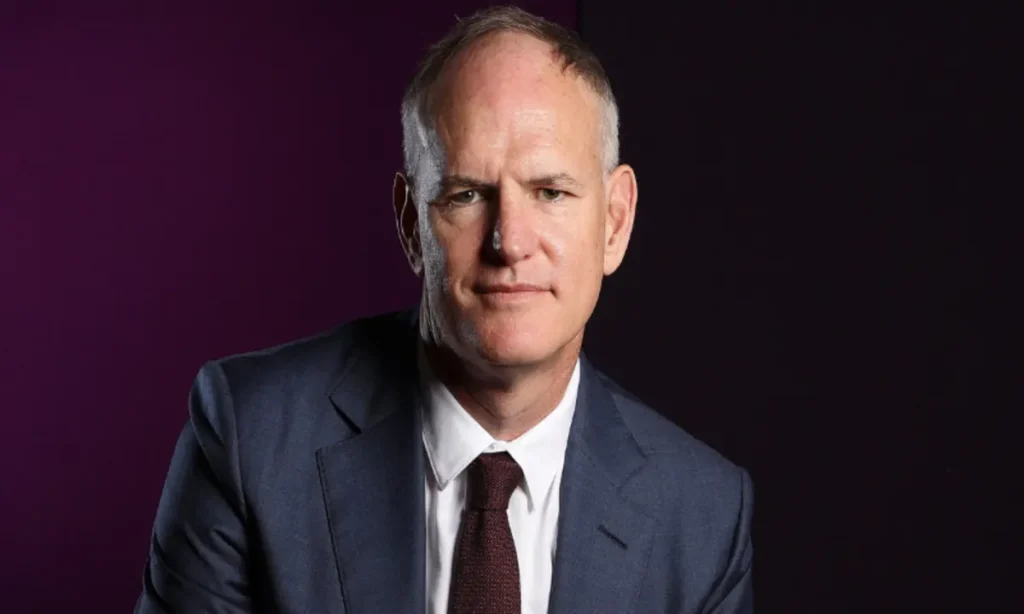

For nearly three decades, Michael F. Miller worked in the machinery of U.S. national security, eventually reaching one of the most consequential positions in the country’s defence-security cooperation structure. His retirement in May 2026 closes a lengthy government career. Still, his departure also offers an opportunity to examine the increasingly complex role of security cooperation in an era defined by geopolitical competition, military modernisation and shifting international alliances.
Why Michael Millers Career Matters
Michael Millers is best known for his leadership of the Defence Security Cooperation Agency, or DSCA, the U.S. government organisation responsible for administering and supporting major elements of American security cooperation with foreign partners.
The agency sits at an important intersection of diplomacy and defence. Its work involves helping allies and partners obtain U.S. defence equipment, strengthening military relationships and supporting broader American security objectives.
Michael Millers career therefore represents more than the biography of a senior government official. It reflects the evolution of U.S. security cooperation from a largely transactional function into a strategic instrument of foreign policy.
The DSCA announced in May 2026 that Miller would retire effective May 30, concluding 28 years of government service. In announcing his departure, the agency described his tenure as distinguished and highlighted his leadership of the organisation.
From Government Service to Senior Defence Leadership
Miller’s rise to the top of DSCA followed decades of experience within the national security establishment.
Senior defence positions require an unusual combination of policy knowledge, institutional experience and an understanding of international relationships. Security cooperation is particularly demanding because decisions about defence equipment and military partnerships can have consequences extending well beyond the Pentagon.
A weapons sale, for example, can influence a partner country’s military capabilities, regional balance of power, interoperability with U.S. forces and diplomatic relationship with Washington.
That makes the work fundamentally different from simply managing procurement.
The Strategic Importance of DSCA
The Defence Security Cooperation Agency has become increasingly important as the United States relies on networks of allies and partners to address security challenges.
Its responsibilities touch several major areas:
- Defence sales and transfers to international partners
- Security-assistance programs
- Support for allied military capabilities
- Cooperation between U.S. forces and foreign militaries
- Administration and oversight of international defence relationships
The broader objective is to strengthen partner capabilities while advancing U.S. strategic interests.
Experts have long viewed security cooperation as one of the tools through which Washington can build long-term relationships without relying exclusively on the deployment of American forces.
That role has become especially significant as international security has grown more complicated.
A Career Shaped by a Changing Security Environment
Michael Millers government career unfolded during a period of major transformation in international security.
When he entered government service, the Cold War had only recently ended. The United States was operating in a world where the structure of international power appeared relatively favourable to Washington.
The following decades produced a very different environment.
The September 11 attacks shifted American defence priorities toward counterterrorism. The wars in Afghanistan and Iraq generated new demands for military cooperation. Later, competition with major powers and growing concerns about regional instability placed renewed emphasis on alliances.
By the 2020s, defence cooperation had become increasingly connected to questions about technology, supply chains, military interoperability and strategic deterrence.
In this environment, organisations such as DSCA became increasingly central to the practical side of American alliances.
Why Defence Sales Are More Than Business Transactions
International defence sales are sometimes discussed primarily in financial terms, but their significance is considerably broader.
When the United States provides advanced aircraft, missile defence systems, naval platforms, or other military technology to an allied country, the transaction can influence that nation’s defence strategy for decades.
There are several reasons.
First, sophisticated military systems often require long-term maintenance and training. A country purchasing American equipment may consequently develop an enduring relationship with U.S. defence institutions.
Second, compatible equipment can make joint military operations easier. Allied forces that use related communications, weapons, and command systems may be better positioned to operate together during a crisis.
Third, defence cooperation can function as a diplomatic signal.
A major agreement may demonstrate that Washington regards a particular country as an important security partner.
For supporters of these programs, that makes security cooperation a form of strategic investment.
Critics Raise Questions About Oversight
The other side of the debate concerns accountability.
Large international defence agreements can involve billions of dollars and highly sophisticated military technology. Critics have therefore questioned how governments balance strategic objectives with concerns about cost, oversight, civilian protection and regional stability.
The debate is not necessarily about whether defence cooperation should exist. Instead, it often centres on how it should be structured and monitored.
Analysts point out that security partnerships can produce long-term benefits, but they can also create complications when political circumstances change.
A country that is considered a valuable partner at one point may later adopt policies that create disagreements with Washington.
This makes oversight and continuing diplomatic engagement important components of the system.
The Broader Evolution of American Alliances
Michael Millers retirement arrives at a moment when the meaning of military partnership is changing.
For decades, American alliances were often understood primarily in terms of bilateral relationships. Today, defence cooperation increasingly operates through interconnected networks.
A regional crisis can involve several countries simultaneously. Military technology is shared across multiple platforms. Intelligence cooperation, logistics and supply chains can cross national borders.
The result is a more complicated strategic environment.
Technology Has Changed the Equation
Modern defence cooperation also extends beyond traditional weapons.
Cyber capabilities, unmanned systems, artificial intelligence, missile defence, satellite communications and advanced surveillance technologies are becoming increasingly important.
These technologies create new opportunities for cooperation, but they also introduce new risks.
Unlike conventional military equipment, software and digital systems can require continual updates. Cyber vulnerabilities can potentially affect multiple partners at once.
That means future security cooperation is likely to require closer integration between traditional defence policy and technology policy.
What Miller’s Departure Could Mean
Michael Millers retirement does not, by itself, represent a sudden change in U.S. defence policy. Large government organisations continue to operate through established structures, career officials, and institutional processes.
Still, leadership transitions can provide an opportunity to reassess priorities.
The next generation of security-cooperation leaders will face several competing pressures.
- Strengthening alliances while managing limited resources.
- Accelerating defence technology transfers without weakening oversight.
- Maintaining interoperability among increasingly diverse partner militaries.
- Responding to geopolitical competition while avoiding unnecessary escalation.
- Balancing speed with accountability in major international defence agreements.
These challenges are likely to become more significant rather than less.
A Career Viewed in Historical Context
The significance of Miller’s career becomes clearer when viewed against the broader history of American defence policy.
The post-Cold War period created expectations that the United States would remain the dominant global military power. The attacks of 2001 altered that strategic outlook, while the conflicts that followed demonstrated the limitations of military power when not supported by sustainable political partnerships.
The subsequent emphasis on alliances and security cooperation represented an evolution in American strategy.
Instead of depending entirely on direct U.S. military intervention, Washington increasingly sought to strengthen partners capable of contributing to regional security.
Miller spent much of his career operating within that evolving system.
His professional journey therefore offers a window into a broader transformation: the shift from a U.S.-centered approach to security toward one that increasingly depends on networks of capable allies and partners.
Looking Ahead
In the short term, Miller’s departure is likely to be viewed primarily as a leadership transition within the defence establishment.
Over the longer term, however, the issues surrounding his former position will remain.
The United States faces continuing pressure to modernise its military relationships, respond to emerging technologies and maintain partnerships across regions where strategic competition is intensifying.
That means the basic questions confronting DSCA are unlikely to disappear with any individual leader.
How quickly should advanced technology be shared? How should Washington measure the effectiveness of security assistance? What safeguards are necessary when defence relationships involve politically complicated partners? And how can military cooperation strengthen deterrence without increasing instability?
These questions will shape the next phase of American security cooperation.
Conclusion
Michael Millers retirement in 2026 closes a government career spanning 28 years and a period of profound change in American national-security policy. His time in senior defence leadership coincided with the transformation of security cooperation from a specialised defence function into an increasingly important component of international strategy.
The larger story, however, extends beyond one official.
As alliances become more interconnected and military technology becomes more sophisticated, security cooperation will continue to play an important role in U.S. foreign and defence policy. The challenge for future leaders will be finding the balance between strategic urgency, responsible oversight and long-term stability.
Michael Millers departure thus marks an ending, but it also highlights an unresolved question for the years ahead: how should the United States build durable security partnerships in a world where both threats and alliances are changing faster than ever?