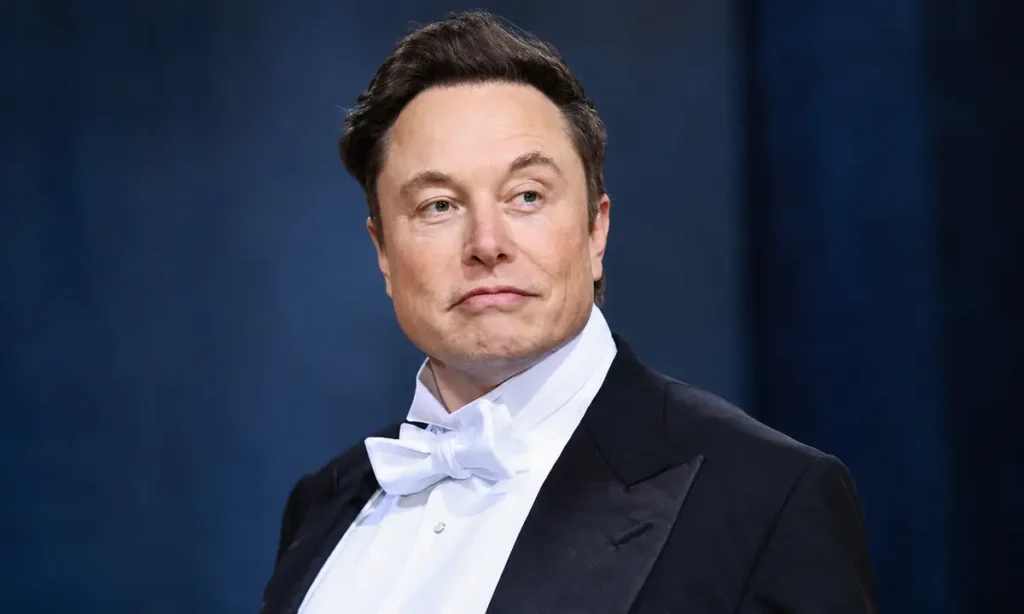

When Elon Musk told a global television audience in 2021 that he has Asperger syndrome, the revelation quickly became part of the larger story surrounding one of the world’s most recognizable technology entrepreneurs. But beyond the headlines, Musk’s disclosure raised a more complicated question: what does it actually mean to describe a highly successful adult as autistic, and how much can one person’s experience tell us about autism as a whole?
Why Elon Musk Autism Disclosure Still Matters
Musk publicly discussed having Asperger syndrome during his opening monologue while hosting Saturday Night Live in May 2021. He joked about his speaking style, limited intonation, and difficulty with social cues, presenting the disclosure as part of his explanation for why he sometimes communicates differently from other public figures.
The moment was significant because Musk was already an unusually visible figure. As the leader of Tesla, SpaceX, and several other technology ventures, he routinely attracts enormous attention.
Elon Musk Autism,His disclosure therefore reached audiences far beyond the autism community. For some autistic people and advocates, seeing a prominent business leader openly identify with the spectrum offered a form of representation. For others, the discussion raised concerns about stereotypes—particularly the idea that autism naturally produces extraordinary intelligence, technical ability, or entrepreneurial success.
Both reactions point toward an important distinction: Musk’s experience is one person’s experience, not a definition of autism.
What Musk Actually Said
Musk did not present a detailed medical history during his television appearance. Instead, he identified himself as having Asperger syndrome, a term historically used for people on the autism spectrum who did not have significant early language or intellectual impairment.
Elon Musk Autism,His remarks focused partly on communication. He described having less vocal variation and suggested that people sometimes have difficulty knowing whether he was joking or serious. He also referred humorously to eye contact and the challenge of interpreting social behavior.
That distinction matters because autism cannot be reliably determined simply by observing someone’s public behavior.
Autism spectrum disorder is diagnosed through developmental history and professional observation rather than a single medical test. Diagnosis considers persistent differences in social communication and interaction alongside restricted or repetitive behaviors or interests.
In other words, an individual’s mannerisms, personality, or communication style are not enough by themselves to establish an autism diagnosis.
Asperger Syndrome and the Modern Autism Spectrum
One source of confusion surrounding Musk’s disclosure is the terminology.
The term “Asperger syndrome” was once used as a separate diagnostic category. Modern diagnostic practice in the United States, however, places what was previously called Asperger syndrome within autism spectrum disorder.
This change reflects a broader shift in how clinicians and researchers understand autism.
Rather than viewing Elon Musk Autism as a simple line from “mild” to “severe,” the spectrum encompasses people with very different combinations of communication patterns, sensory experiences, interests, behaviors, intellectual abilities, and support needs.
This is why describing someone as “high-functioning” can sometimes be misleading. A person may have significant challenges in one area while experiencing relatively few difficulties in another.
Autism Is Not a Formula for Genius
Perhaps the most persistent misconception surrounding Musk is the suggestion that his reported autism explains his achievements.
His career undeniably includes extraordinary accomplishments. Tesla became a major force in the electric-vehicle industry, while SpaceX transformed expectations surrounding commercial spaceflight. Musk has also been involved in ventures ranging from artificial intelligence to social media and infrastructure.
But there is no scientific basis for concluding that Elon Musk Autism automatically produces entrepreneurial brilliance.
Research on autistic strengths has found that autistic people may have valuable abilities in areas such as concentration, specialist interests, attention to detail and particular forms of problem-solving. At the same time, researchers caution against turning these observations into stereotypes that are assumed to apply to every autistic person.
A systematic body of research has also examined the idea of an “autism advantage,” emphasizing that autistic strengths can vary considerably between individuals and situations.
That point is especially important when discussing a billionaire entrepreneur.
Musk’s achievements are the result of numerous factors, including education, opportunity, financial resources, professional networks, risk tolerance, technical interests, management decisions, and years of work. Reducing that history to a diagnosis would be an oversimplification.
The Other Side of the Story: Autism and Workplace Challenges
The public image of autism can become distorted when the most visible examples are highly successful people.
For many autistic adults, the central challenge is not achieving extraordinary wealth or becoming famous. It is finding suitable employment, navigating workplace expectations, and receiving appropriate support.
Research has identified stigma, limited understanding of autism, and communication difficulties as important barriers to employment for autistic adults. Workplace attitudes and understanding can significantly influence employment outcomes.
Studies examining autistic people’s workplace strengths have found a wide range of abilities, while researchers have repeatedly emphasized the importance of recognizing individual differences rather than relying on generalized assumptions.
This creates a useful contrast with the Musk narrative.
A famous autistic entrepreneur can challenge the assumption that Elon Musk Autism prevents professional achievement. But the same example can unintentionally create another stereotype—that autistic people should be exceptionally gifted in technology or mathematics to be valued.
Neither assumption accurately represents the spectrum.
Why Representation Can Be Powerful
Musk’s disclosure also belongs to a broader cultural shift in which public figures have become more open about neurological and developmental differences.
For decades, autism was often portrayed primarily through childhood diagnosis, clinical terminology, or severe disability. Greater recognition of autistic adults has expanded the public conversation toward identity, employment, relationships, education, and workplace accommodations.
Some people are not diagnosed until adolescence or adulthood, meaning that autism can remain unidentified for years.
That is relevant to Musk’s story because his disclosure came when he was already an established adult.
His decision to speak publicly may therefore have contributed to a broader recognition that autism does not disappear after childhood and that autistic adults can occupy highly visible professional roles.
But representation works best when it reflects diversity rather than presenting a single template.
The Risk of Explaining Every Behavior Through Autism
One of the most complicated aspects of celebrity discussions about autism is the temptation to reinterpret everything a public figure does through the diagnosis.
Musk has frequently attracted controversy over his public statements, business decisions, and interactions with critics. It can be tempting for observers either to attribute unusual behavior to autism or, conversely, to argue that certain controversial actions disprove his disclosure.
Neither approach is particularly useful.
Autism is not a universal explanation for personality, judgment or conduct. A diagnosis does not automatically explain why a person makes a particular business decision, writes a particular social-media post or behaves controversially.
Experts emphasize individual differences within the autistic population. Broad assumptions about what autistic people can or cannot do may themselves become harmful stereotypes.
The more responsible approach is to separate three questions:
- What has Musk publicly said about himself?
- What does medical research say about autism generally?
- What conclusions, if any, can reasonably be drawn about Musk’s individual behavior?
The first question can be answered from Musk’s own public disclosure. The second is addressed through clinical and scientific research. The third requires considerably more caution.
Autism in a Changing Public Landscape
The conversation surrounding autism has also changed because identification has increased.
Recent surveillance data in the United States indicate that approximately 1 in 31 children aged eight were identified with autism in 2022 across monitored communities, although rates varied between locations.
These numbers do not mean that autism suddenly became a new phenomenon. They reflect decades of changes in diagnostic definitions, awareness, screening, access to evaluation, and recognition of people who might previously have gone unidentified.
The history of autism diagnosis is therefore important when discussing older adults.
Someone who grew up before current diagnostic frameworks were widely used may have experienced social and developmental differences without receiving a formal diagnosis in childhood. Modern awareness has made it more possible for some adults to understand their experiences through an autism diagnosis later in life.
What Musk’s Story May Mean for Neurodiversity
The broader significance of Musk’s disclosure may ultimately have less to do with Musk himself and more to do with how society understands neurological differences.
The concept of neurodiversity emphasizes that neurological variations should be considered alongside the barriers and support needs that people experience. Research on autistic employment has highlighted both the value of recognizing individual strengths and the continuing impact of stigma.
For employers, that can mean focusing less on whether an employee behaves according to conventional social expectations and more on whether the workplace allows people to perform effectively.
For the public, it means resisting two opposite stereotypes:
- Autism does not automatically prevent someone from becoming successful.
- Autism does not automatically make someone exceptionally intelligent or gifted.
The reality is much more varied.
What Comes Next?
Musk’s disclosure is unlikely to end debates about autism and celebrity. As more prominent adults discuss neurodevelopmental diagnoses, public interest will probably continue to grow.
The more important development may be the increasing attention to autistic adults who are not household names.
Future conversations are likely to focus more heavily on employment, diagnosis in adulthood, workplace accommodations, education, and the experiences of people whose autism does not fit popular stereotypes.
Elon Musk Autism,Research also suggests that disclosure can have both benefits and risks. Some autistic employees may disclose a diagnosis to obtain accommodations or understanding, while others avoid disclosure because of concerns about discrimination.
That tension is unlikely to disappear soon.
Conclusion
Elon Musk’s public disclosure about Asperger syndrome became a defining moment in the popular conversation about autism, partly because of his extraordinary visibility and partly because it challenged conventional assumptions about who can be autistic.
Yet the most useful lesson is not that autism explains Musk’s success. Nor is it that his behavior should be interpreted through a diagnostic label.
TElon Musk Autism,he larger lesson is that autism is a broad and highly individual spectrum. Some autistic people may excel in areas that attract public attention; others may require substantial support in everyday life. Many will fall somewhere between those extremes.
Musk’s story has opened a door into that conversation, but it cannot tell the whole story. As public understanding of Elon Musk Autism continues to evolve, the more meaningful question may be whether society can move beyond famous examples and stereotypes toward a fuller picture of the millions of people whose experiences with autism are far less visible.