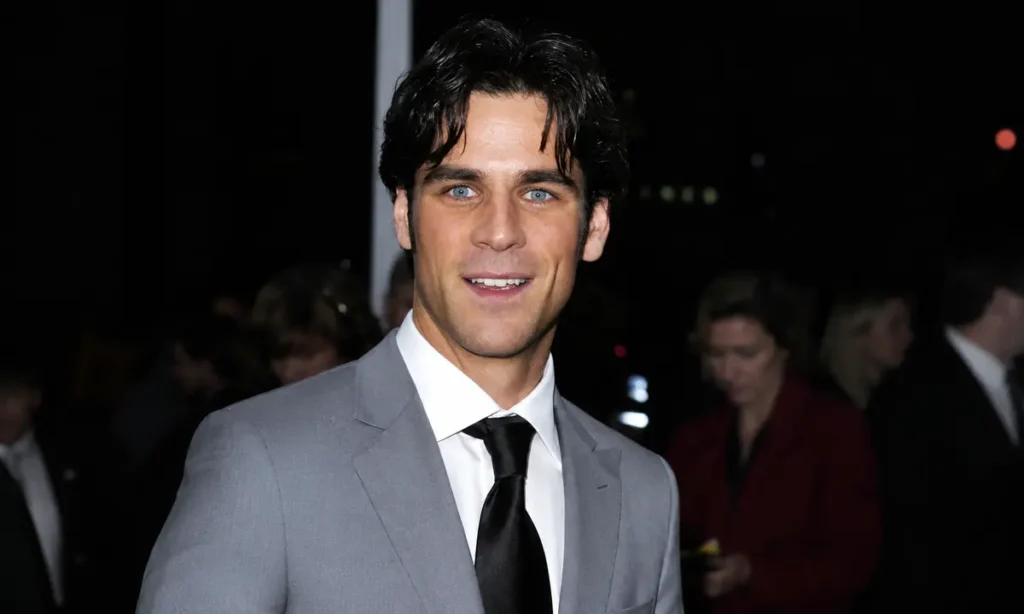

For audiences searching for Edmund Patrick, the name may initially seem unfamiliar. In Hollywood, however, Edmund Patrick Cahill is better known as Eddie Cahill, the New York-born actor whose career has stretched from a recurring role on Friends to the long-running crime drama CSI: NY. His more recent appearance in the 2025 film Materialists has also brought renewed attention to an actor whose career has largely developed through steady, character-driven work rather than constant celebrity headlines.
Who Is Edmund Patrick Cahill?
Edmund Patrick Cahill was born on January 15, 1978, in New York City. He grew up in New York and eventually pursued acting through both formal education and theater training.
Cahill attended Skidmore College before studying at the Atlantic Theater Acting School, associated with New York University’s Tisch School of the Arts. His early training was rooted in theater, an experience that would later become an important part of his approach to screen acting.
His professional screen career began around the turn of the millennium. Rather than immediately receiving a major starring role, Cahill accumulated experience through guest appearances and theater work.
That gradual progression would prove significant. His early credits included appearances on programs such as Sex and the City, Felicity, and Law & Order: Special Victims Unit. These roles helped establish him as a recognizable young actor capable of moving between different television genres.
The Friends Breakthrough
For many viewers, Cahill’s first major introduction came through Friends.
He played Tag Jones, Rachel Green’s young assistant and romantic interest, during the show’s later seasons. The role was recurring rather than central, but the enormous popularity of Friends gave Cahill a level of exposure that could have been difficult to achieve through smaller productions alone.
Cahill later described the experience as overwhelming because he was still relatively young and found himself working alongside an already-established ensemble that included Jennifer Aniston, Matthew Perry, Lisa Kudrow and David Schwimmer. In a later interview, he recalled feeling nervous while joining such a globally recognizable series.
The role also demonstrated an early characteristic of his career: Cahill could make an impression without necessarily being the central figure in a production.
That ability became useful as he moved into increasingly substantial roles.
From Television to the Big Screen
In 2002, Cahill received a leading opportunity in Glory Days, a short-lived WB drama. Although the series did not become a lasting television success, it represented an important step for an actor attempting to move beyond guest appearances.
Edmund Patrick’s biggest film opportunity arrived in 2004 with Miracle, the sports drama centered on the United States men’s ice hockey team’s historic run at the 1980 Winter Olympics.
Cahill portrayed Jim Craig, the team’s goaltender. The role had particular significance for the actor because Craig had been one of Cahill’s childhood heroes.
The production also presented a practical challenge. Cahill had not previously been a professional hockey goaltender, so experienced hockey personnel were used for portions of the demanding on-ice sequences. Former NHL goaltender Bill Ranford served as a double for much of the action, while Cahill participated in selected sequences himself.
The film became an important part of Cahill’s professional identity.
Instead of being remembered solely as the young actor from Friends, he was now associated with a serious dramatic sports film and a real historical figure.
The Defining Role: Don Flack on CSI: NY
Later in 2004, Cahill joined another major project that would ultimately become his most recognizable television role.
Edmund Patrick was cast as Detective Don Flack on CSI: NY, the third major series in the CSI television franchise.
The character was a New York homicide detective working alongside the show’s forensic investigators. Flack’s personality differed sharply from some of Cahill’s earlier roles. Rather than the youthful romantic character seen on Friends, he was tougher, more experienced, and closely connected to the show’s police investigations.
The series ran for nine seasons, giving Cahill an unusually long period to develop a single character. His work on the program helped establish him as a dependable television drama performer.
Why the Role Mattered
Several factors made Don Flack important to Cahill’s career:
- It gave him a long-running character rather than a short guest appearance.
- It positioned him within one of television’s most successful procedural franchises.
- It allowed him to explore dramatic material over multiple seasons.
- It separated his professional identity from his earlier Friends appearance.
Edmund Patrick himself later discussed the appeal of playing different types of people. In a 2005 interview, he said he enjoyed the opportunity to portray both heroic and darker characters, emphasizing that complicated characters could be particularly interesting for an actor.
Life After CSI: NY
When CSI: NY ended its run, Cahill did not disappear from television.
He joined the cast of Under the Dome, the CBS science-fiction drama based on Stephen King’s novel. He later appeared in the legal drama Conviction, starring opposite Hayley Atwell.
His subsequent work included appearances in NCIS: New Orleans, Fantasy Island, and Blue Bloods. These projects reflected another pattern in his career: rather than concentrating exclusively on one type of role, Cahill continued moving between genres.
That approach can be challenging in an entertainment industry that often encourages actors to build a very specific screen identity.
For Cahill, however, versatility appears to have been a consistent feature of his career.
A Return to Film With Materialists
One of the more recent developments in Cahill’s career came with Celine Song’s 2025 romantic drama Materialists.
The film starred Dakota Johnson, Chris Evans, and Pedro Pascal, with Cahill appearing as Robert. The movie was released in the United States in June 2025 and became a notable theatrical release, reportedly earning more than $100 million worldwide against a production budget of roughly $20 million.
Cahill’s role was not the central focus of the film, but his involvement illustrates the way his career has evolved.
He remains recognizable to television audiences while continuing to accept supporting film roles and other character opportunities.
The project also placed him within a different filmmaking environment from the procedural dramas that made him famous.
The Importance of Theater
Although Cahill is most widely recognized for television and film, theater has remained part of his professional background.
Before becoming widely known, he appeared Off-Broadway in Nicky Silver’s The Altruists. He later worked in David Adjmi’s 3C.
For actors, theater can provide a different kind of discipline from television production.
Live performance demands sustained concentration, timing, and character development without the ability to repeatedly edit a scene after the performance. Cahill’s theater background therefore provides useful context for understanding why his career has included such a broad range of screen characters.
What Makes Cahill’s Career Stand Out?
Cahill’s career is not defined by a single blockbuster franchise or a constant stream of headline-making projects.
Instead, it reflects a more traditional model of professional acting.
His trajectory can broadly be understood in four stages:
- Training and theater, where he developed his foundation as a performer.
- Television exposure, including guest roles and Friends.
- Major recognition, through Miracle and CSI: NY.
- Long-term character work, involving television dramas, films, and theater.
That progression is significant because entertainment careers rarely develop in a perfectly linear fashion.
A successful television appearance does not guarantee another major role, and a well-received film does not automatically lead to continued movie stardom. Cahill’s career demonstrates how an actor can maintain professional relevance by repeatedly adapting to new formats and characters.
Public Recognition and the Challenge of Typecasting
One of the unusual aspects of Cahill’s career is the contrast between the roles audiences remember him for.
To some viewers, he remains Tag from Friends. To others, he is inseparable from Don Flack on CSI: NY. Film audiences may recognize him more readily as Jim Craig from Miracle.
This creates both an advantage and a challenge.
Familiarity can help an actor remain recognizable, but it can also make it difficult to escape an established character image. Cahill’s continued work across television and film suggests an effort to avoid being permanently confined to one role.
Looking Ahead
At 48, Cahill has reached a stage of his career where longevity itself becomes part of the story.
His recent appearance in Materialists demonstrates that his work remains connected to contemporary film, while his extensive television résumé provides a substantial foundation for future opportunities.
The entertainment industry’s changing landscape may also create new possibilities. Streaming platforms have expanded demand for limited series, character dramas and ensemble productions, areas where experienced television actors can be particularly valuable.
At the same time, there is no reliable way to predict whether Cahill’s next major opportunity will come from film, television, theater, or a return to a familiar franchise.
Conclusion
Edmund Patrick Cahill—professionally known as Eddie Cahill—has built a career that illustrates the less predictable side of Hollywood success.
His path from theater training to Friends, Miracle, CSI: NY, later television dramas, and Materialists has been marked less by celebrity spectacle than by sustained professional work. His most famous characters are dramatically different, yet each contributed something to a career spanning more than two decades.
For audiences rediscovering his name today, Cahill’s story is a reminder that an actor’s career cannot always be measured by headline appearances or blockbuster billing. Sometimes longevity comes from the ability to adapt, disappear into a character, and return when the right role arrives.
The larger question is what the next chapter will look like—and whether Cahill’s evolving body of work will introduce him to a new generation of viewers who know him by a character yet to come.