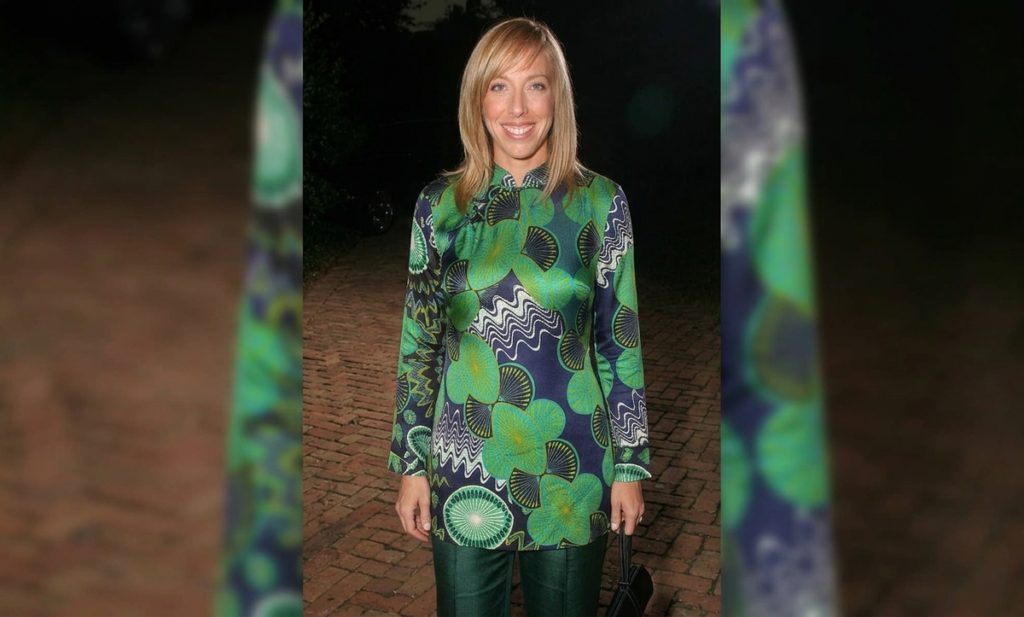

Denika Kisty is a name that frequently appears alongside former NBA point guard Jason Williams, but her story began on a track-and-field field rather than a basketball court. A former javelin thrower, Kisty competed at the NCAA level and earned All-American recognition during her collegiate career. Today, her relatively private life still draws interest, making the distinction between documented achievements and online speculation increasingly important.
Why Denika Kisty’s Story Matters
Celebrity biographies often become simplified over time. Someone connected to a famous athlete can quickly be defined by a relationship rather than by independent achievements.
Kisty’s public profile illustrates that pattern. Denika Kisty is widely known because of her relationship with Jason Williams, the former NBA guard whose creative style and spectacular passing helped make him one of basketball’s most recognizable players of his generation.
Yet Kisty had already established herself as a competitive athlete before her connection to professional basketball became part of her public identity.
The strongest evidence comes from collegiate track-and-field records. The University of Florida’s official record book lists Kisty among its women’s outdoor All-Americans, with one All-American entry.
That achievement offers a more useful starting point for understanding her biography than many unsupported personal details that circulate online.
Denika Kisty’s Athletic Background
A Career Built Around the Javelin
Kisty’s primary documented event was the javelin throw, one of track and field’s most technically demanding disciplines.
Unlike running events, where performance can often be understood through a straightforward race time, javelin combines speed, strength, coordination, balance, and highly refined throwing technique. The athlete must generate significant momentum during the approach and then transfer that energy into the implement at precisely the right moment.
Denika Kisty reached that level of competition during the 1990s.
Her athletic record also shows her career wasn’t limited to a single college program. Penn State’s official NCAA outdoor history records Denika Kisty finishing 10th in the javelin at the 1996 NCAA championships.
That result is particularly useful because it provides a primary institutional record of her national-level competition.
The Florida Years
Kisty later competed for the University of Florida, where her career reached another important milestone.
Florida’s historical track-and-field records list her among the school’s women’s outdoor All-Americans. A Florida record identifies her javelin result as ninth place, with a mark of 160 feet, 7 inches.
Independent athletics records also list a personal-best javelin mark of approximately 160 feet, 6.75 inches in 1997, broadly consistent with the Florida documentation.
These records put her athletic background into perspective. Kisty was not simply a recreational college athlete who later became known through a famous spouse. She competed on the national collegiate stage and reached All-American status.
What All-American Recognition Says About Her Career
The phrase “All-American” can sometimes sound like a general sports honor, but at the collegiate level it represents a significant achievement.
Kisty’s recognition placed her among athletes competing at the highest levels of American college track and field.
The historical record also reminds us how easily online biographies can blur important distinctions. Some recent profiles describe Kisty as a two-time All-American, while Florida’s current outdoor record book lists one Florida women’s outdoor All-American entry. She earned her 1996 NCAA result while representing Penn State.
The most responsible interpretation is therefore straightforward: Kisty was an NCAA-level javelin competitor and an All-American athlete associated with the University of Florida, while the exact way her All-American honors are counted varies across later sources.
That distinction matters because her athletic accomplishments are strong enough that there is little reason to embellish them.
From Track and Field to a More Private Life
A Different Kind of Public Figure
After her competitive athletic career, Kisty did not pursue the type of public profile that has become common among former athletes and celebrity spouses.
Reliable information about her professional activities after college is limited. Unlike many sports personalities, she has not maintained a highly visible media career built around interviews, entertainment appearances, or frequent public commentary.
That relative absence of information has created an unusual situation.
The less someone publicly discusses their life, the more room there can be for speculation. Search engines may return numerous pages containing claims about age, birthplace, career, finances, and family circumstances, even when those details cannot be traced to strong primary sources.
For Kisty, that means the most reliable biography is also relatively restrained.
Denika Kisty and Jason Williams

The Connection That Made Her More Widely Known
Kisty’s name became much more familiar to basketball audiences through her relationship with Jason Williams.
Williams rose to prominence through his basketball career and became particularly famous for his creative passing, ball-handling, and entertaining style. His professional career brought him a large fan base, and his family naturally received some attention as a result.
Kisty, however, followed a different path.
She was an athlete herself, but her sport was track and field, not basketball. That makes the couple’s athletic backgrounds particularly notable: both entered adulthood through competitive sports, but in very different disciplines.
Their relationship also became part of a broader sports-family story.
Their daughter Mia Williams later became associated with Florida softball, giving the family another connection to the University of Florida’s athletic tradition. Recent coverage of Mia’s collegiate career has highlighted the significance of her mother’s previous Gators athletic career.
This creates a rare generational link. Kisty competed for Florida in track and field, while her daughter later continued the family’s connection to the university through another sport.
The Importance of Privacy
Why So Many Details About Her Remain Unclear
One defining characteristic of Kisty’s public profile is what is missing.
No extensive collections of interviews detail her childhood. No large archive of public statements explains her personal decisions. And little evidence shows she has tried to turn her connection to professional basketball into a separate celebrity career.
That makes some commonly repeated biographical claims difficult to verify.
For example, various websites publish specific birth years, hometown information, and other personal details. Some list a birth year around 1977, while others present additional biographical information as fact without identifying a primary source.
A more careful approach is to separate the information into two categories:
- Well-documented: her collegiate track-and-field career, javelin specialization, and NCAA-level competition.
- Less certain: several details concerning her exact birth date, childhood, and private life.
That distinction does not make her story less interesting. If anything, it makes the documented parts more meaningful.
A Sports Legacy That Extends Beyond One Career
Kisty’s story can also be viewed through the changing role of sports families.
For decades, the public tended to associate athletic achievement with individual stars. Today, families with multiple generations of athletes increasingly attract attention because they show how sporting culture can be passed from one generation to another.
Kisty’s family reflects that pattern.
She built her athletic identity through javelin. Jason Williams became famous through basketball. Their daughter Mia pursued softball.
The sports are different, but the underlying themes are similar: training, competition, discipline, and the pressure of performing publicly.
For a former athlete who has largely avoided the spotlight, that legacy may ultimately be more significant than celebrity recognition.
What the Public Record Tells Us
Taken together, the available evidence points to several key points.
- Kisty was a serious collegiate athlete.
- Her NCAA and university records establish that her javelin career reached a high competitive level.
- Her athletic story predates her association with NBA fame.
- The track-and-field record provides an independent identity rather than merely a supporting role in a basketball biography.
- Florida is an important part of her sporting history.
- The university’s records recognize her as a women’s outdoor All-American.
- Her later life has remained comparatively private.
- That privacy means some details frequently repeated online may not be equally reliable.
- Her family’s sports connections continue into another generation.
- The Florida connection later became relevant to her daughter Mia’s athletic career.
What Could Come Next?
There is little indication that Kisty is seeking a major return to public life.
In the short term, interest in her name is likely to remain connected to Jason Williams, Florida athletics and the family’s broader sports history. Searches may also increase whenever stories about Williams or their children’s athletic careers bring the family back into public view.
The longer-term picture is less predictable.
As digital archives become more comprehensive, historical athletic records may offer a fuller account of Kisty’s achievements. At the same time, greater access to information does not necessarily mean greater access to someone’s private life.
That distinction is increasingly relevant for people whose public recognition came through a relationship rather than through entertainment or media careers of their own.
Conclusion
Denika Kisty’s story is ultimately more substantial than the simple label often attached to her name.
Before she was known for her connection to Jason Williams, she was a competitive athlete who reached the NCAA level in javelin and earned recognition at the University of Florida. Those achievements provide a documented foundation for understanding her career and demonstrate that her place in the sports world was established independently.
Her decision to maintain a quieter life afterward has left many questions unanswered, but it has also made the verified parts of her biography stand out more clearly.
In an era when public figures can document almost every aspect of their lives, Kisty represents a different model: achievement without constant visibility. Her story raises a broader question about how sports history should remember people who made significant contributions without choosing a life in the spotlight—and whether the most enduring legacy sometimes comes from what an athlete accomplished rather than how famous they later became.