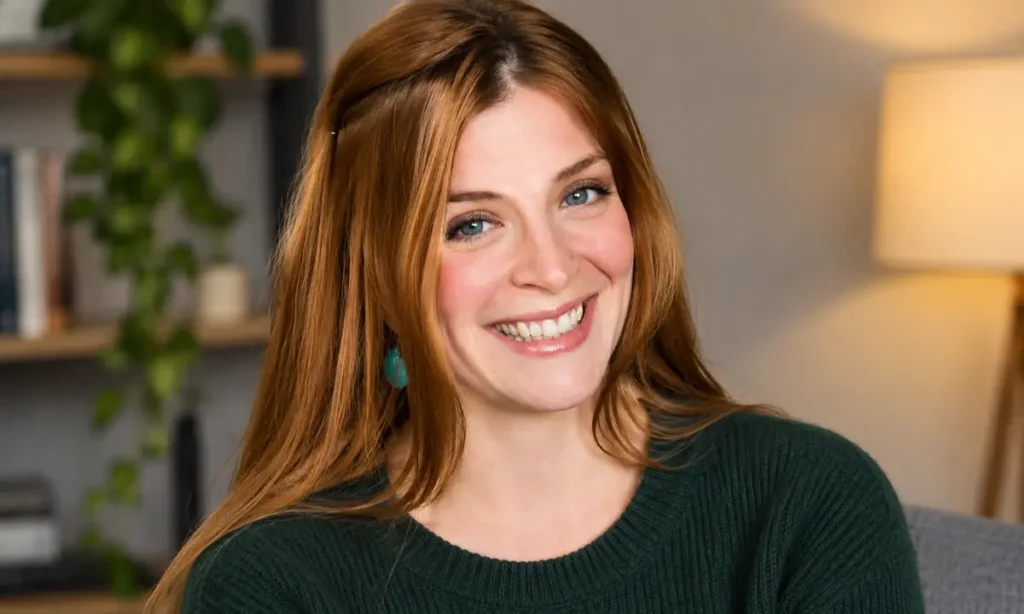

Cassia Streb occupies an unusual but increasingly important space in contemporary music. A Canadian-born composer, violist, sound artist, and curator based in Los Angeles, she has spent years working across classical performance, experimental composition, and site-specific sound. Rather than treating music as something confined to a concert stage, Streb often uses objects, architecture, movement and environmental sounds as part of the musical experience.
Her career offers a window into a broader transformation in contemporary music: the gradual breakdown of boundaries between composer, performer, installation artist and audience.
Who Is Cassia Streb?
Cassia Streb is a Los Angeles-based composer and sound artist whose work combines viola performance, improvisation, found objects, electronics and recorded sound. Her artistic practice is strongly connected to the idea that music can respond to particular situations, environments, and locations.
That approach distinguishes Streb from musicians whose careers are primarily organized around conventional albums or traditional concert performances.
Her projects frequently ask listeners to pay attention to sounds that might otherwise disappear into the background. A room, a piece of architecture, a collection of ordinary objects, or even performers’ movement can become part of the composition.
Her work is therefore difficult to place within a single genre. It draws from contemporary classical music, experimental composition, improvisation, sound installation and interdisciplinary performance.
From Classical Viola to Experimental Sound
Streb began with formal classical viola training before moving toward more experimental musical traditions.
A significant stage in her education came in 2006, when she completed a Master of Fine Arts in the Multi-Focus String Performance Program at the California Institute of the Arts. During her studies, she worked with influential musicians and composers associated with experimental and contemporary music.
The environment exposed her to approaches that questioned traditional ideas about composition and performance.
After completing her MFA, Streb increasingly moved toward experimental sound practices and composition.
That transition helps explain much of her later work. Instead of abandoning the viola, she expanded the definition of what the instrument could do and how it could interact with other sounds.
A Career Built Around Collaboration
Collaboration is a defining characteristic of Streb’s career.
Cassia Streb has worked with musicians, dancers, filmmakers, visual artists and theatre creators, often developing projects in which no single artistic discipline dominates.
Her collaborations have included experimental musicians and ensembles as well as artists working in movement, film and installation.
Earlier projects and performances have connected her with figures from the American experimental-music tradition. At the same time, her ensemble work has placed her within a wider network of contemporary composers and performers.
This collaborative approach is important because experimental music often depends on relationships between disciplines.
A composer may provide a score, but the final result can also depend on the acoustics of a room, the physical movement of performers, or the behavior of an audience.
For Cassia Streb, those variables are not necessarily problems to control. They can become part of the artwork itself.
The Importance of Site-Specific Sound
When the Location Becomes Part of the Composition
One of the clearest examples of Streb’s artistic philosophy is her interest in site-specific work.
Rather than creating a piece first and deciding later where it will be performed, site-specific sound begins with a particular location’s characteristics.
Architecture, background noise, physical materials, and acoustics can influence the work.
This approach has appeared in collaborative projects involving modular walls, sensors, computers and speakers. In such performances, the physical environment can be altered while simultaneously affecting the acoustic environment.
The result is not simply music played inside a building.
The building itself becomes part of the instrument.
That idea reflects a broader movement within contemporary art toward immersive experiences, where audiences are encouraged to experience sound physically and spatially rather than simply listening from a fixed seat.
Found Objects and the Music of Everyday Life
Cassia Streb’s approach also challenges conventional assumptions about what qualifies as a musical instrument.
Her performances can incorporate small percussion instruments and found objects alongside the viola. Her recorded projects have used materials such as bells, keys, nails, stones, broken glass, flowerpots and other everyday objects.
At first glance, these objects might appear disconnected from formal music.
In an experimental context, however, they can become tools for exploring texture, rhythm, resonance and memory.
This philosophy can make her work particularly interesting for audiences unfamiliar with contemporary experimental music. A listener does not necessarily need to understand complex musical theory to recognize the sound of an object striking another surface.
The familiarity of the objects can create a bridge into unfamiliar musical territory.
Major Recordings and Projects
Streb’s recorded work provides another way to understand the development of her artistic language.
Her solo album Marginal Habitats represents an important part of her recorded output. Her broader discography also includes collaborative projects that explore improvisation, unconventional instrumentation, and experimental approaches to sound.
Unspooling
Unspooling was created through a live performance environment and combines viola with unconventional materials.
The project’s instrumentation includes objects such as brushes, superballs, rough sticks, files, ceramic rattles, broken flowerpots, bottle caps, bells, nails and stones.
The project illustrates how Streb’s music can emerge from the interaction between ordinary physical objects and carefully developed performance techniques.
Betwixt
Her collaboration with Tim Feeney on Betwixt similarly focuses on small sounds and unconventional sonic materials.
The documented instrumentation includes objects such as pebbles, bells, keys, nails, a rice cooker, a cigar box, a tin can, and pieces of broken glass, alongside viola.
The significance of these recordings is not simply their unusual instrumentation.
They demonstrate a consistent artistic interest: listening closely to sounds that conventional music often excludes.
Streb as a Curator and Community Builder
Streb’s influence extends beyond her own compositions.
She has also taken on curatorial responsibilities within Los Angeles’ experimental music community.
Cassia Streb has served as Artistic Director of the Dog Star Orchestra, a summer festival focused on independent, experimental, and non-commercial artists. The festival has provided a platform for musicians and composers whose work may not fit comfortably into conventional music institutions.
The festival’s programming demonstrates the breadth of the contemporary experimental scene.
Events associated with the festival have brought together composers, performers, and interdisciplinary artists, creating opportunities for audiences to encounter experimental work outside the traditional concert structure.
This aspect of Streb’s career is significant because experimental artists often depend on alternative institutions and community networks.
Creating opportunities for other artists can be as important as producing one’s own work.
Expanding Access to Experimental Music
Another project associated with Streb is Music for Your Inbox, a hybrid virtual and in-person experimental sound, film, and visual-art subscription series.
The concept aims to remove some barriers to contemporary art by delivering work directly to audiences through digital communication and physical formats.
The idea reflects a challenge facing experimental music: how can artists reach people who might never attend a specialized contemporary-music concert?
Digital distribution offers one answer, but Streb’s projects suggest another—bringing experimental art into familiar spaces and formats.
Her curatorial work has similarly connected experimental sound with live events and installations, helping create settings where audiences can encounter unconventional approaches to music without needing specialized knowledge beforehand.
Why Her Work Matters in Contemporary Music
Experimental music has increasingly emphasized listening as an active, rather than passive, experience.
Ensembles and organizations associated with this movement often bring together contemporary classical music, experimental chamber music, avant-garde traditions, and sound art.
Streb’s work fits naturally into that environment.
Her importance is not necessarily measured by mainstream chart success or commercial visibility. Instead, it can be seen through the networks of artists, ensembles, festivals, educational institutions and alternative performance spaces in which she participates.
She has also contributed to educational conversations surrounding composition, improvisation and artistic collaboration through guest lectures and academic appearances.
That educational dimension adds another layer to her career.
She is not simply producing experimental music; she is also contributing to conversations about how experimental music is created, performed, and understood.
The Broader Cultural Context
Streb’s career reflects a larger shift in the arts.
For much of the modern era, classical music was associated with established instruments, formal concert halls, and clearly defined roles. Experimental music has steadily challenged those assumptions.
Today, compositions can involve:
- Architecture and environmental acoustics
- Found and recycled objects
- Electronics and sensors
- Improvisation
- Film and visual art
- Dance and physical movement
- Audience participation
- Digital distribution
Streb’s work brings several of these approaches together.
Her career also demonstrates how Los Angeles has become an important center for experimental and interdisciplinary artistic activity. Rather than existing entirely on the margins of the city’s broader entertainment industry, experimental musicians have developed their own networks of festivals, galleries, universities, performance spaces and artist-run projects.
What Comes Next for Cassia Streb?
The direction of Streb’s career suggests that collaboration and interdisciplinary work will remain central.
Her projects with other experimental artists demonstrate continued interest in sound installation and unconventional instruments. At the same time, her work with ensembles and festivals points toward an ongoing role as both performer and organizer.
The short-term outlook is therefore likely to involve more collaborations, installations, performances and curatorial projects rather than a conventional shift toward mainstream music.
Longer term, her influence may be harder to measure.
Experimental artists often shape cultural conversations gradually. A technique developed in a small performance space can later influence students, composers, curators or interdisciplinary artists working in very different settings.
That may ultimately prove more significant than conventional measures of popularity.
Continue exploring our website for more compelling biographies, cultural insights, and carefully researched stories that go beyond the headlines: Timeupdate.co.uk
Conclusion
Cassia Streb’s career is a study in what happens when a traditionally trained musician refuses to treat tradition as a boundary.
Her foundation as a violist remains visible, but her work has expanded into composition, sound installation, improvisation, curation, and interdisciplinary performance. By incorporating ordinary objects, unusual spaces and collaborative processes, she has developed an artistic language centered on listening and discovery.
Her broader significance lies in that willingness to reconsider what music can be.
At a time when audiences encounter art through increasingly diverse formats, Streb’s work raises a quietly important question: if a room, an object, a movement, or an environmental sound can change the way we listen, where does the musical experience actually begin—and where does it end?