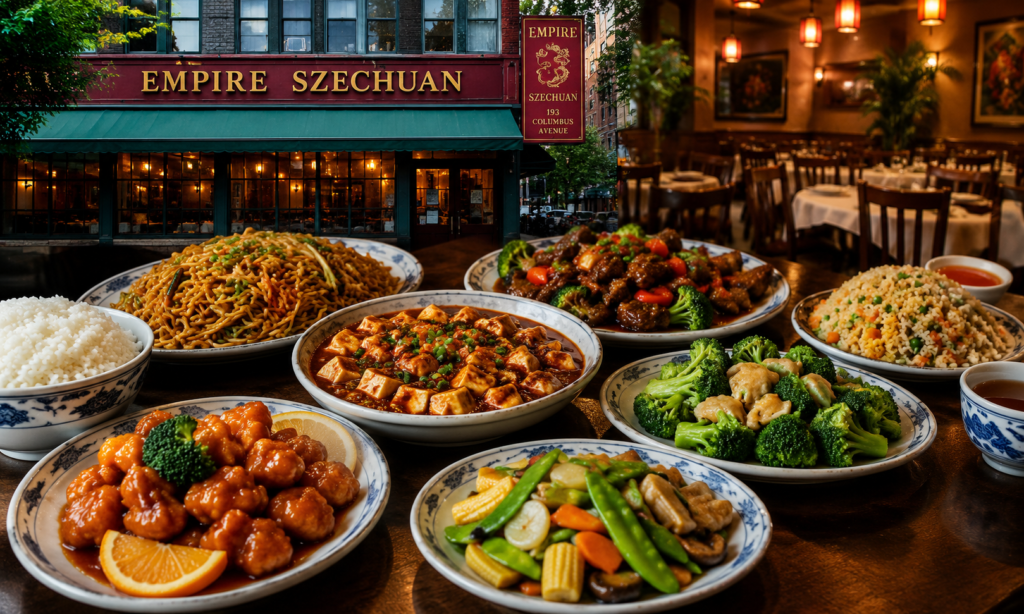

New York’s restaurant scene is constantly changing, but some neighbourhood establishments remain part of the local dining landscape for years. Empire Szechuan is one such restaurant, associated with Manhattan’s Upper West Side and known for its extensive Chinese menu, vegetarian selections, takeout and delivery services.
Its story offers a useful look at how an established neighbourhood restaurant operates in a competitive food market where diners increasingly have more choices, more dietary preferences and greater expectations for convenience.
Empire Szechuan and Its Upper West Side Setting
Empire Szechuan is located at 193 Columbus Avenue in Manhattan, near Lincoln Centre. The location places the restaurant in an area shaped by residential communities, cultural institutions, businesses, visitors and a steady flow of people attending performances and events.
That environment can be particularly valuable for a restaurant offering a broad menu.
One customer might visit for a sit-down meal, while another may order delivery after work. Someone attending a nearby event may want a quick dinner, while a neighbourhood resident may return for a familiar dish.
This mix of customers helps explain why restaurants in established Manhattan neighbourhoods often keep menus that cover a wide range of tastes.
Empire Szechuan’s menu follows that model, featuring numerous Chinese dishes alongside vegetarian choices and other Asian-inspired offerings.
A Broad Interpretation of Chinese Dining
Although the restaurant’s name highlights Szechuan cuisine, its menu extends beyond a single regional Chinese tradition.
Sichuan cuisine is traditionally associated with strong flavours, chilli peppers, and the distinctive numbing sensation produced by Sichuan peppercorns. However, many Chinese-American restaurants in the United States have historically offered broader menus rather than restricting themselves to one regional style.
Empire Szechuan fits within that wider tradition.
Its menu includes meat, seafood, vegetables, soups, and speciality dishes. This variety lets customers with different preferences order from the same restaurant.
Why Menu Variety Matters
A broad menu can be particularly useful in a city as diverse as New York.
Restaurants often serve groups where everyone wants something different. One person may prefer seafood, another may choose chicken, and someone else may want a vegetarian meal.
A restaurant that can accommodate all three customers has a practical advantage.
At the same time, maintaining a large menu requires careful management. More dishes mean more ingredients, more preparation requirements and greater pressure on kitchen staff to maintain consistency.
Vegetarian Options and Changing Dining Habits
One notable part of Empire Szechuan’s menu is its selection of vegetarian dishes.
Vegetarian dining has become increasingly visible throughout New York’s restaurant industry. Consumers may choose meat-free meals for personal preferences, dietary reasons, environmental considerations or simply because they enjoy vegetable-based dishes.
Restaurants that provide several vegetarian choices can therefore appeal to a wider customer base.
Empire Szechuan offers vegetable dishes as well as meat-substitute preparations. However, diners with strict dietary requirements still need to pay attention to individual ingredients and preparation methods.
Vegetarian and vegan dining are not always identical, particularly when sauces, cooking stocks or shared preparation equipment are involved.
The Importance of Takeout and Delivery
Convenience has become central to the modern restaurant business, especially in a city like New York.
Empire Szechuan offers takeout and delivery alongside traditional restaurant service. This gives customers several ways to interact with the business without requiring them to eat every meal inside the restaurant.
The difference may seem small, but it can significantly affect restaurant operations.
A single kitchen may need to handle:
- Customers eating inside the restaurant
- Takeout orders
- Delivery orders
- Lunch traffic
- Dinner rushes
- Large or customised orders
Managing those demands requires coordination between the kitchen, front-of-house staff and ordering systems.
For established restaurants, maintaining that balance can be just as important as the food itself.
Customer Experiences Are Not Always Identical
Public restaurant reviews tend to present a mixed picture, which is common for long-running dining establishments.
Some customers describe Empire Szechuan as a convenient neighbourhood option and appreciate its menu variety and vegetarian choices. Others have raised concerns about particular dishes, service experiences, portion sizes or order consistency.
These different experiences highlight an important reality about restaurant reviews: individual visits can vary.
A customer arriving during a quiet afternoon may have a very different experience from someone visiting during a busy dinner period.
Likewise, expectations matter. A diner looking for an inexpensive neighbourhood meal may judge the restaurant differently from someone expecting a highly formal or specialised culinary experience.
For that reason, individual reviews are best understood as personal experiences rather than definitive measurements of an entire restaurant.
The Economics Behind a Neighbourhood Restaurant
Behind every established restaurant is a complicated business model.
Restaurants must manage food costs, labour, rent, utilities, delivery expenses and other operating costs. At the same time, customers generally expect competitive prices.
This creates a difficult balancing act.
A restaurant cannot simply increase prices whenever costs rise without potentially affecting demand. Yet keeping prices unchanged can squeeze margins when expenses rise.
Menu design becomes important in this environment.
Restaurants may emphasise dishes that can be prepared efficiently, use ingredients across multiple menu items or offer combinations that provide customers with perceived value.
A large menu can provide flexibility, but it also requires more inventory and organisation.
The Digital Side of the Restaurant Business
Another important development in modern restaurant operations is the increasing importance of digital infrastructure.
Customers now commonly expect restaurants to provide online menus, ordering information, operating hours and contact details.
For an established business, a website is effectively an extension of the storefront.
When an online ordering system or website is temporarily unavailable, customers may struggle to find current information, even if the physical restaurant continues operating normally.
This reflects a broader change in the restaurant industry. A business’s digital presence has become closely connected to how customers discover, evaluate and interact with it.
Empire Szechuan in a Changing Chinese Restaurant Market
New York’s Chinese restaurant industry has evolved significantly over the years.
The city is home to restaurants representing numerous regional traditions, including Sichuan, Cantonese, Shanghainese, Hunan and other cuisines.
This growing diversity has changed what many diners expect from Chinese restaurants.
Customers who once looked mainly for familiar Chinese-American dishes can now find restaurants specialising in particular regional traditions. At the same time, traditional Chinese-American restaurants continue to attract customers who value familiarity, variety and convenience.
Empire Szechuan sits within this larger transition.
Its broad menu reflects an older and still-popular approach to Chinese-American dining, while its delivery and takeout services reflect newer consumer habits.
What Could Shape Its Future?
The future of any individual restaurant depends on factors that are hard to predict from the outside.
Several issues will likely remain important for Empire Szechuan and similar neighbourhood restaurants.
1. Customer Loyalty
Long-term customers can provide stability for an established restaurant. Familiarity with a menu and location can encourage repeat visits.
2. Changing Food Preferences
Greater interest in vegetarian, vegan and regional Chinese cuisine may influence how restaurants structure their menus.
3. Digital Ordering
Online ordering and delivery have become important parts of restaurant operations. Maintaining reliable digital systems can affect customer convenience.
4. Operating Costs
Food, labour, and property expenses will continue to influence restaurant pricing and profitability.
5. Competition
New York’s dining market remains highly competitive. Restaurants must distinguish themselves while maintaining the qualities that existing customers appreciate.
A Broader Look at Neighbourhood Dining
Empire Szechuan’s significance extends beyond its individual menu.
Restaurants like this are part of the fabric of urban neighbourhoods. They provide familiar places for residents, convenient meals for workers and visitors, and dining options for people with different budgets and preferences.
Their survival depends on more than food alone.
Location, customer relationships, pricing, convenience, menu variety and the ability to adapt all play a role.
That makes the restaurant a useful example of the broader challenges facing established independent and neighbourhood-oriented restaurants in major American cities.
Conclusion
Empire Szechuan represents a familiar but evolving model of New York Chinese dining. Its broad menu, vegetarian selections, and takeout and delivery services allow it to serve a wide range of customers while staying connected to the traditional neighbourhood restaurant model.
At the same time, the changing restaurant industry presents continuing challenges. Customers have more choices, dietary expectations are evolving, digital ordering has become increasingly important, and operating costs remain a central concern.
The restaurant’s next chapter will ultimately depend on how effectively it balances familiarity with adaptation. For established neighbourhood restaurants across New York, that balance may be one of the defining questions of the years ahead.