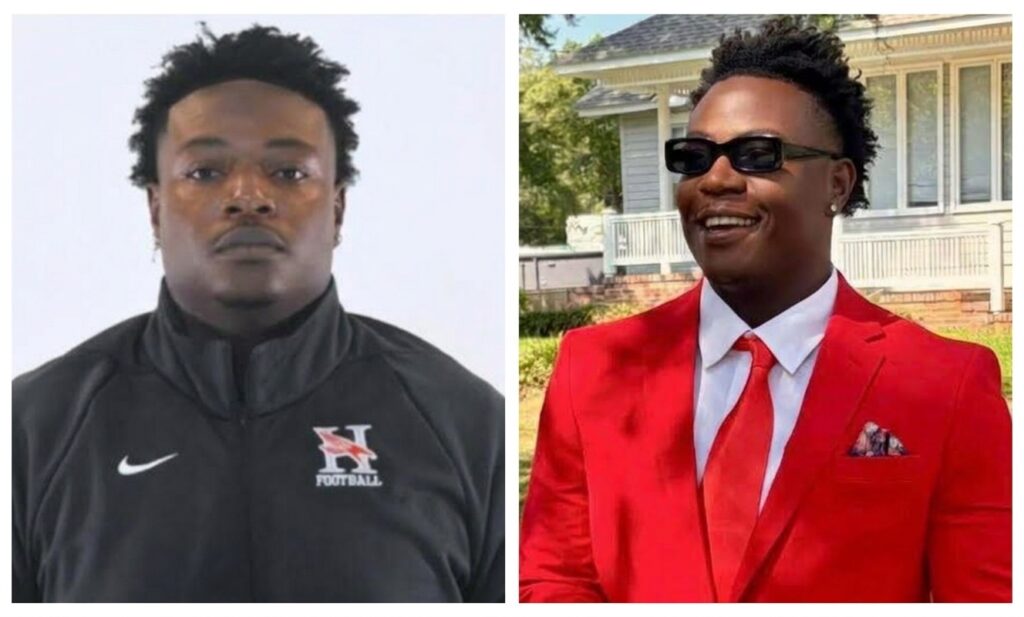

On a November morning in 2025, a young college football player from Tuscaloosa, Alabama, became the center of a story that stretched far beyond the football field. James Owens Jr., a 20-year-old defensive lineman at Huntingdon College, died in a head-on collision in Chilton County. In the months since, memories of Owens have focused not only on the circumstances of his death, but on the student, teammate, friend, and community member he had been becoming.
Who Was James Owens Jr.?
James Owens Jr. was a Tuscaloosa native who continued his education and football career at Huntingdon College in Montgomery, Alabama.
Publicly available information about his private life is limited, but his athletic record provides a clear picture of his development. Huntingdon’s 2024 football materials listed Owens as a sophomore defensive lineman, 6-foot-2 and 235 pounds, with Northridge High School in Tuscaloosa as his previous school.
By the 2025 season, Owens was a junior and had become part of Huntingdon’s defensive rotation. Game records show him appearing as a defensive end and contributing tackles during the season.
That progression matters because college athletics often represents more than competition. For athletes at smaller colleges, football can be closely connected with education, friendships, identity, and a sense of belonging.
Owens’ story was still in that developmental stage when his life was suddenly cut short.
From Northridge High School to Huntingdon College
Before reaching the college level, Owens played football at Northridge High School in Tuscaloosa.
Local reporting described him as a standout and a dependable member of his high school program. Former Northridge coach Mike Vickery remembered James Owens Jr as someone who consistently brought a positive presence to his teammates.
That connection between high school and college became particularly important after his death. Northridge was not simply a former school on a football résumé; it was one of the communities that knew him before he became a college athlete.
At Huntingdon, Owens continued playing along the defensive line. His physical profile—6-foot-2 and 235 pounds—gave him the size expected of a defensive lineman, and his game appearances show he was actively developing in the program.
During a 2025 game against Hendrix College, for example, Owens recorded four assisted tackles. In another game against McMurry University, he recorded a tackle and a quarterback hurry.
Those numbers don’t tell the whole story, but they show James Owens Jr wasn’t just listed on a roster. He was participating and contributing.
The November 2025 Crash
The event that brought Owens wider attention occurred early on 10 November 2025.
According to the Alabama Law Enforcement Agency, as reported by local television outlets, Owens was driving a Chevrolet Camaro on U.S. Highway 82 in Chilton County when it collided head-on with a pickup truck driven by 42-year-old Justin Carlee of Maplesville. The crash occurred at approximately 5:35 AM, near the 99-mile marker, roughly two miles west of Maplesville. Both drivers died at the scene.
At the time of the initial reports, authorities said the investigation was underway.
That distinction is important. The publicly reported facts establish the location, time, vehicles, and fatalities, but early reports did not establish a definitive cause for the collision. As a result, speculation about what led to the crash should be separated from the confirmed information.
The accident also claimed the life of Carlee, meaning the incident affected two families and two communities rather than Owens’ circle alone.
A College Football Program Confronts Loss
For Huntingdon College, Owens’ death represented the loss of a teammate and student at a particularly young age.
The college’s football program described him as a significant presence on the defensive line and emphasized characteristics such as kindness, respect, and integrity in its public remembrance.
Head coach Mike Turk also spoke about the loss’s impact on the team. Reports indicated that players and coaches had to navigate the difficult balance between grieving a teammate and continuing the football season.
That situation is familiar across college sports. Teams are built around routines—practice, meetings, travel, and competition. When a teammate dies unexpectedly, those routines can become part of the grieving process while also creating an emotional challenge for everyone involved.
For Huntingdon, Owens’ memory became connected to the remainder of its season.
His Faith Became Part of the Remembrance
Another important element of the public remembrance involved Owens’ Christian faith.
Huntingdon College Chaplain and Dean of the Chapel Rhett Butler said Owens had recently been baptized following a football practice. Butler described the young athlete as particularly certain about his decision to take that step in his faith.
The detail became part of the tributes because it reflected something about Owens’ life beyond football.
It also illustrated how different parts of a young person’s identity can intersect within a college community. For Owens, football, education, friendship, and faith were all parts of the environment in which he was building his adult life.
A Memorial in Tuscaloosa
Several days after the crash, friends and family gathered at Northridge High School for a balloon release in Owens’ memory.
According to WBRC, dozens of people attended the 16 November gathering. Many wore Huntingdon’s red colors, creating a visible connection between Owens’ high school roots and his college years.
Memorial gatherings of this kind serve a practical purpose during periods of grief. They provide relatives, former classmates, and teammates with a shared setting in which to remember someone outside the circumstances of their death.
For Owens’ community, the gathering also reinforced how many people were connected to his life.
He had been a high school football player, a college athlete, a student, and a member of several overlapping communities. His death therefore resonated across institutions that had played different roles in his development.
What His Football Record Shows
Owens’ available football statistics offer a useful but limited view of his athletic career.
Some documented details include:
- Position: Defensive lineman/defensive end
- College: Huntingdon College
- Hometown: Tuscaloosa, Alabama
- High school: Northridge High School
- Listed size: 6-foot-2, 235 pounds
- College career: Three seasons, according to local reporting
- Career tackles: 20, reported by Patch
- 2025 production: 10 tackles across five games, according to reports citing his season statistics
The statistics suggest an athlete still progressing rather than someone whose career had reached its peak.
That is one reason his death had such a particular impact. At 20, Owens was still in the process of finding out what his abilities might eventually produce.
The Broader Meaning of His Story
Stories about college athletes are often told through statistics: tackles, sacks, games played, and seasons completed.
Owens’ story demonstrates the limitations of that approach.
His documented football numbers establish his role on the team, but tributes from coaches, teammates, and community members emphasize qualities that cannot be captured in a box score.
His former high school coach remembered his smile and value as a teammate. Huntingdon officials emphasized his conduct away from the field. His college chaplain spoke about his faith. Friends and family gathered at his former high school to remember him.
Together, those accounts provide a broader picture of a young man whose life had multiple dimensions.
What Comes Next for His Legacy?
Owens has no conventional career trajectory to follow. His football career ended before he could determine how far it might have taken him.
Instead, his legacy will likely remain connected to the communities where he spent his formative years.
For Huntingdon, that means remembering a defensive lineman who played for the program during the 2024 and 2025 seasons. For Northridge, it means remembering a former player whose life continued beyond high school. For his family and friends, the significance is naturally much more personal.
The public record also illustrates why caution is necessary when discussing his death. The crash itself is well documented, while many aspects of Owens’ private life remain outside public reporting. A responsible account must therefore distinguish between verified information and details that have not been publicly established.
Remembering James Owens Jr.
James Owens Jr.’s story ultimately is not only about a fatal highway crash or a college football roster.
It is about a 20-year-old who was still building his identity and future when that process was interrupted. His path from Northridge High School to Huntingdon College reflected a familiar American college-athletics journey: education and sport developing alongside friendships, faith, and personal ambitions.
His death left questions that statistics alone cannot answer. What might his football career have become? What direction might his education and personal life have taken? Those possibilities ended before anyone could explore them.
What remains is the record of a young athlete remembered by two educational communities and the people who knew him personally. In the months following his death, those memories shifted the focus away from a single tragic morning and toward the fuller life that preceded it.
For James Owens Jr., that broader story—student, teammate, son, friend, and athlete—may ultimately be the most enduring part of his legacy.