

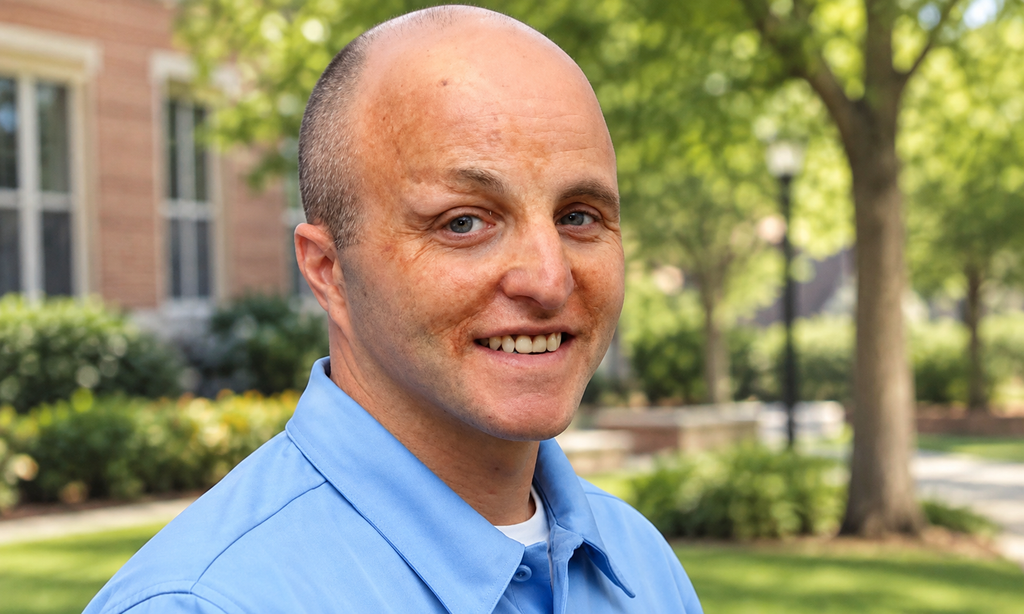
At first glance, Keith Edmonds’ career might seem like a familiar story of professional reinvention. He has worked in corporate sales, written a book, built a speaking career, and founded a nonprofit. But the experiences that shaped his public work began much earlier, with a childhood trauma that left him physically scarred and emotionally affected for years.
Today, Edmonds is known as a life-transformation speaker whose message centers on resilience, responsibility, and the possibility of rebuilding after adversity. His story has also become closely connected with efforts to support children affected by abuse and neglect.
Who Is Keith Edmonds?
Keith Edmonds is an American motivational and life-transformation speaker, author, and nonprofit founder. His professional identity centers on speaking to students, business audiences, and community groups about overcoming adversity and changing the direction of one’s life.
According to Keith Edmonds’ official biography, he earned a bachelor’s degree from Central Michigan University and later built a career in corporate sales, including roles at Dell and Coca-Cola. He says his sales performance earned him repeated recognition, while his ability to connect with hard-to-reach communities became central to his professional reputation.
His career, however, cannot easily be separated from his personal history.
Edmonds has spent years publicly discussing childhood abuse, bullying, addiction, and the long-term emotional consequences of trauma. Rather than presenting those experiences as isolated chapters, he has made them central to his work with young people and adults.
The Childhood Trauma That Changed His Life
The defining event in Keith Edmonds’ early life occurred when he was about 14 months old.
According to his own account, his mother’s boyfriend held his face against an electric heater, leaving him with severe third-degree burns. Edmonds was not expected to survive, and the injuries resulted in extensive treatment and years of surgeries.
The physical scars were only one part of the aftermath.
As he grew older, Edmonds says he experienced bullying and isolation. His appearance became a source of unwanted attention, while the emotional consequences of the abuse continued long after the physical injuries had healed.
This distinction is important when considering his later work. His story is not simply about surviving a childhood accident or injury. It is about the complicated relationship between physical trauma, identity, shame, and long-term emotional wellbeing.
From Survival to Self-Destructive Behavior
Keith Edmonds has described his teenage and young adult years as a period marked by alcohol abuse, depression and other destructive behavior.
His official biography says he began abusing alcohol at 13 and spent more than two decades struggling with depression, substance abuse and encounters with the law.
Those experiences eventually became a major part of the story he tells audiences today.
Rather than portraying personal transformation as an overnight event, his account describes it as a gradual process that followed years of difficulty.
That distinction matters because recovery narratives are often simplified after the fact. In Edmonds’ case, his public message emphasizes that changing direction required accepting responsibility for his future without denying the damage his Past caused.
The Turning Point
According to Keith Edmonds, a major turning point came at 35.
His biography identifies that period as when he decided to stop letting resentment define his life and began working toward a different future.
From there, his professional life took a different direction.
He entered corporate sales and worked for major companies including Dell and Coca-Cola. His official biography says he consistently received top sales awards and was assigned a particularly challenging inner-city Detroit sales route while working for Coca-Cola.
The corporate experience added another dimension to his eventual speaking career.
Rather than building a message based only on personal hardship, Edmonds could also speak about performance, communication, professional goals, and leadership. His current speaking material combines those themes with his experience of surviving childhood abuse.
From Corporate Sales to Public Speaking
Over time, Keith Edmonds shifted increasingly toward speaking and personal development.
His current professional platform describes him as a life-transformation and mindset speaker. His keynote programs focus on turning adversity into resilience, improving performance and helping audiences reconsider the limitations they place on themselves.
That work has included schools, universities, civic organizations, and professional audiences.
Brainz Magazine also identifies Edmonds as a life-transformation expert and contributor. The publication notes that he has spoken to organizations and groups across the country, including audiences connected with child welfare and public institutions.
The evolution is notable: the experiences that once contributed to isolation eventually became the foundation for his public identity.
The Keith Edmonds Foundation
One of the most significant developments in Edmonds’ career came in 2016, when he established the Keith Edmonds Foundation.
The organization was created to assist children affected by abuse and neglect and to provide support to adult survivors. A 2017 Lebanon Wilson County Chamber of Commerce report documented the foundation’s ribbon-cutting ceremony and described its mission as helping children who had become victims of abuse and neglect.
The foundation represents a practical extension of Edmonds’ personal story.
Instead of focusing only on motivational speeches, the organization has been associated with programs intended to provide tangible assistance to vulnerable children.
Backpacks of Love
One of the foundation’s early initiatives was known as “Backpacks of Love.”
The program provided backpacks to children removed from their homes because of abuse or neglect. The bags contained practical supplies and comfort items such as blankets, books, journals, stuffed animals, and night lights.
In 2016, MusicRow reported that the Chicks with Hits organization helped assemble backpacks for the program. The report also noted a $10,000 contribution from Eric Church and his wife through the Chief Cares Fund of the Community Foundation of Middle Tennessee.
The initiative illustrates a broader point about child welfare: support does not always begin with large institutional interventions. For a child entering foster care or another unfamiliar environment, basic belongings can provide a sense of security during an extremely disruptive moment.
Why Edmonds’ Story Resonates
Keith Edmonds’ public work exists within a much larger conversation about childhood trauma and resilience.
Experts studying trauma have long emphasized that adverse experiences during childhood can influence emotional development, relationships, behavior, and later health. At the same time, research into resilience shows that negative experiences do not automatically determine a person’s future.
That context helps explain the appeal of Edmonds’ message.
His approach is fundamentally narrative. He uses his own history to demonstrate that a traumatic beginning does not necessarily have to dictate the rest of a person’s life.
Critics of purely motivational approaches to trauma, however, would point out that individual determination is only one part of recovery. Access to stable housing, mental-health services, supportive relationships, education, and safe communities can also play crucial roles.
For that reason, Keith Edmonds’ story is most useful not as a universal formula for overcoming trauma, but as one individual’s account of a highly difficult journey.
The Book “Scars: Leaving Pain in the Past”
Edmonds also put his experiences into book form with Scars: Leaving Pain in the Past.
The book presents his childhood abuse, struggles with addiction and depression, and eventual transformation as the basis for a broader discussion about personal change. Published descriptions characterize it as both a memoir and a guide for readers attempting to move beyond painful experiences.
The central idea is straightforward: scars, whether physical or emotional, can become part of a person’s history without defining them entirely.
That theme has remained consistent throughout Edmonds’ speaking career.
A Career Built Around Resilience
There are several distinct stages in Keith Edmonds’ professional journey:
- Childhood survival: A severe injury during infancy shaped his physical and emotional development.
- Years of struggle: Bullying, depression, alcohol abuse, and legal problems complicated his adolescence and early adulthood.
- Personal turning point: Edmonds describes his 35th birthday as a moment when he decided to change direction.
- Corporate career: He developed professional experience in sales with companies including Dell and Coca-Cola.
- Public speaking: His personal story became the foundation of a national speaking career.
- Nonprofit work: In 2016, he established the Keith Edmonds Foundation to support abused and neglected children.
Taken together, these stages show why his career doesn’t fit neatly into a single category.
He is an author, speaker, entrepreneur, and advocate whose professional identity is closely tied to his personal history.
What Comes Next for Keith Edmonds?
Edmonds’ current professional platform continues to emphasize keynote speaking, leadership, resilience, and mindset. His presentations increasingly connect personal adversity with workplace performance and leadership development.
That direction suggests his future work may continue to expand beyond traditional motivational speaking.
The broader challenge will be maintaining the balance between inspiration and practical support. Personal stories can make difficult subjects accessible, but lasting change often requires systems and resources that extend beyond a stage or keynote presentation.
For Edmonds, the combination of public speaking, writing, and nonprofit work offers several ways to keep that conversation going.
The Broader Significance of Keith Edmonds’ Story
Keith Edmonds’ story is ultimately less about a single traumatic event than about what happened afterward.
The physical scars from his childhood injury became visible reminders of an experience he could not choose. The more complicated challenge was dealing with the emotional consequences that followed: isolation, addiction, depression, and resentment.
His later career demonstrates how dramatically a person’s public identity can change over time.
Today, Edmonds presents himself not primarily as a victim of childhood abuse but as someone who survived it and chose to build a career around helping others. His foundation’s work with children adds a practical dimension to that message, while his speaking and writing provide a platform for discussing resilience.
No simple formula exists for transforming trauma into a meaningful life. Edmonds’ experience does not erase the seriousness of childhood abuse, nor does it suggest that every survivor will follow the same path.
What it does show is that a person’s history can keep mattering without permanently determining their future.
As Edmonds continues his work with students, professionals, and organizations, the larger question remains relevant well beyond his own story: how can personal resilience, professional opportunity, and community support work together to give survivors of adversity a genuine chance to build something different?