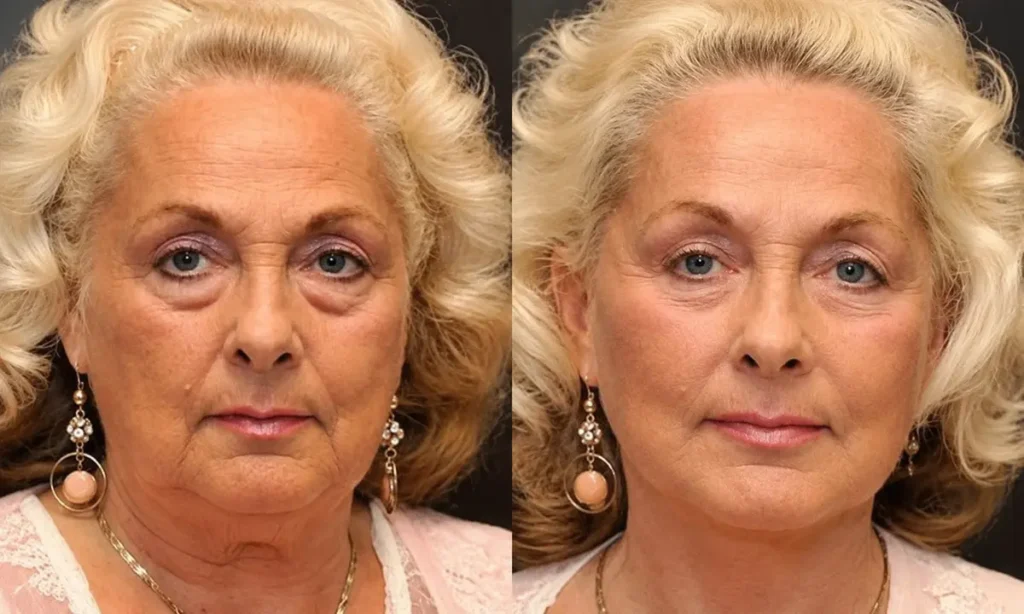

The phrase “mini facelift” suggests a smaller procedure, a shorter recovery and a more modest transformation. But when results go wrong, the consequences can be anything but minor. Uneven contours, visible scars, nerve problems, persistent swelling, and unnatural facial tension are among the complications that can follow poorly planned or poorly executed surgery. The growing popularity of minimally invasive cosmetic procedures has therefore renewed attention on what happens when a supposedly limited operation becomes a difficult medical problem.
Why a Mini Facelift Can Still Go Wrong
A Botched Mini Facelift is generally designed to address early signs of facial aging, particularly mild sagging around the cheeks, jawline, and lower face. Compared with a traditional facelift, it typically involves smaller incisions and less extensive tissue dissection.
That distinction, however, does not mean the procedure is risk-free.
Facial surgery involves delicate skin, connective tissue, blood vessels and nerves. Even a relatively limited operation requires careful anatomical planning. The outcome depends not only on the surgical technique but also on factors such as skin quality, facial structure, healing capacity and the patient’s expectations.
A “botched” mini facelift is not a precise medical diagnosis. The term is commonly used by patients, media outlets and online communities to describe an outcome they consider unsatisfactory. Clinically, surgeons may instead refer to complications, asymmetry, scarring, contour irregularities, nerve injury, or dissatisfaction with the aesthetic result.
That distinction matters because not every disappointing result represents negligence or surgical error.
When an Outcome Is Considered Poor
Botched Mini Facelift,Possible problems after facelift surgery can include:
- Noticeable facial asymmetry
- Excessive skin tightness
- Visible or widened scars
- Hairline or earlobe distortion
- Persistent swelling
- Skin irregularities or contour changes
- Temporary or, more rarely, persistent nerve weakness
- Infection or bleeding
- A result that does not match the patient’s expectations
Some problems improve naturally during recovery. Others may require additional treatment or corrective surgery.
The Evolution of the “Mini” Facelift
Facelift surgery has changed considerably over the past century.
Early facelift procedures focused primarily on removing excess skin. Over time, surgeons developed techniques that repositioned deeper facial tissues rather than relying solely on skin removal. The evolution of these methods was driven by a desire to produce more natural and longer-lasting results.
The modern Botched Mini Facelift emerged partly from this broader movement toward less extensive surgery.
Rather than treating substantial facial aging, the procedure is generally marketed toward people with relatively mild laxity who want improvement without undergoing a traditional facelift. Smaller incisions and limited dissection can make the operation appealing to patients concerned about downtime.
But the popularity of the technique has also created a communication challenge.
The word “mini” describes the scope of surgery, not the absence of risk.
A patient may interpret the label as meaning the procedure is simple or nearly risk-free. Surgeons, meanwhile, may use the term to describe a particular surgical approach that still requires significant expertise.
What Factors Can Contribute to a Poor Result?
There is rarely a single explanation for a disappointing facelift.
Patient Selection
One important factor is whether the procedure is appropriate for the patient’s anatomy and degree of aging.
Someone with substantial skin laxity, significant jowling, or advanced neck aging may not obtain the desired result from a limited procedure. Attempting to achieve a major transformation through a technique intended for modest correction can create unrealistic expectations.
Experts often emphasize that the best cosmetic procedure is not necessarily the least invasive one. It is the procedure that appropriately matches the patient’s anatomy and goals.
Surgical Technique
Facelift surgery requires precision because tissues must be repositioned without creating excessive tension.
Over-tightening the skin can contribute to an unnatural appearance. Poorly placed or poorly managed incisions can result in visible scars or distortion around the ears and hairline.
In more serious cases, damage to nerves or disruption of the blood supply to the skin can create medical complications beyond cosmetic dissatisfaction.
Healing and Individual Biology
Even technically successful surgery can produce unpredictable results because people heal differently.
Smoking, certain medications, underlying medical conditions, and individual scar-forming tendencies can affect recovery. Swelling and bruising may also temporarily make a result look considerably worse before it improves.
This is one reason surgeons generally assess outcomes over months rather than days.
The Role of Expectations
Cosmetic surgery exists at the intersection of medicine and personal identity, making expectations particularly important.
A patient may hope to look significantly younger while still appearing completely unchanged. Those goals can conflict.
Photographs, social media filters, and heavily edited before-and-after images can further distort perceptions of what surgery can realistically accomplish. A procedure designed to create a subtle improvement may appear disappointing when compared with digitally altered images or highly selected surgical results online.
This does not make patient dissatisfaction irrelevant.
If a person feels that surgery has produced an unnatural or unwanted appearance, that concern deserves careful evaluation. But determining whether the problem is a complication, a mismatch of expectations, or a technical issue requires an appropriate clinical assessment.
When Revision Surgery Becomes an Option
Corrective surgery is sometimes necessary, but rushing into another operation can create additional problems.
Surgeons commonly allow substantial time for swelling and scar tissue to settle before determining whether revision is appropriate. The exact timeline depends on the complication and the patient’s recovery.
Revision procedures can be more complicated than the original operation because scar tissue changes normal anatomy.
A Typical Evaluation May Consider
- What changed after the original surgery?
- Is the problem improving with time?
- Is there a medical complication requiring treatment?
- Would nonsurgical management help?
- If surgery is needed, what tissue remains available for correction?
A second opinion from an appropriately qualified facial plastic or plastic surgeon can provide another perspective when a patient remains concerned about the result.
The Broader Cosmetic Surgery Landscape
The Botched Mini Facelift is part of a larger trend toward procedures marketed as faster, gentler, or more discreet.
Patients increasingly encounter terms such as “lunchtime facelift,” “short-scar facelift,” and other branded descriptions. Some techniques may involve genuinely different surgical approaches, while others are essentially variations on established procedures.
The terminology can make comparisons difficult.
Two clinics may use the same phrase while performing substantially different operations. Conversely, different marketing terms may describe techniques with considerable overlap.
For patients, the practical question is therefore less about the label and more about what is actually being performed.
What Patients and Surgeons Can Learn
The debate surrounding botched mini facelifts highlights several broader lessons.
First, informed consent is central. Patients need to understand both the expected benefits and possible complications.
Second, surgeon qualifications matter. Experience with facial anatomy and facelift procedures is particularly important because cosmetic precision and medical safety are closely connected.
Third, recovery should not be judged too quickly. Swelling, bruising, and temporary asymmetry can change substantially during healing.
Finally, the smallest procedure is not automatically the safest or most appropriate. Surgical planning should be based on anatomy rather than marketing language.
Real-World Impact Beyond Appearance
The consequences of a poor cosmetic surgery outcome can extend beyond appearance.
Botched Mini Facelift,Corrective treatment can involve additional expense, time away from work, and prolonged emotional stress. A person who expected a relatively straightforward procedure may instead face months of uncertainty.
There can also be broader effects on trust in cosmetic medicine.
High-profile stories of poor outcomes often spread rapidly online, sometimes without enough information to determine what actually happened. A photograph showing asymmetry shortly after surgery may be presented as evidence of a permanent failure even though the patient may still be recovering.
Conversely, genuine complications can sometimes be dismissed simply because they occurred after a procedure marketed as minimally invasive.
Both extremes can obscure the medical reality.
What Comes Next for Mini Facelifts?
The future of facial rejuvenation is likely to involve increasingly individualized treatment rather than a single universally preferred procedure.
Advances in surgical planning, imaging, tissue-preserving techniques and postoperative care may improve predictability. At the same time, demand for less invasive procedures is unlikely to disappear.
Patients increasingly want visible improvement without the recovery associated with major surgery. Surgeons will therefore continue to explore ways of achieving meaningful results through smaller interventions.
But the central challenge will remain unchanged: matching the right procedure to the right patient.
The growing sophistication of cosmetic medicine may also place greater emphasis on transparency. Clear explanations of what a procedure can—and cannot—achieve could help reduce unrealistic expectations and improve patient decision-making.
Conclusion
A botched mini facelift is more than a story about a cosmetic procedure that did not produce the desired appearance. It illustrates the complicated relationship between medical technique, patient expectations, marketing language, and the unpredictable process of healing.
The mini facelift can offer meaningful improvement for appropriately selected patients, but its smaller incisions do not eliminate the risks associated with facial surgery. When complications occur, careful evaluation and patience may be as important as the original operation itself.
As cosmetic surgery continues moving toward less invasive approaches, the most important question may not be how “mini” a procedure can become, but how accurately surgeons and patients can determine what treatment is appropriate in the first place. The future of facial rejuvenation may ultimately depend less on making procedures smaller and more on making decisions more precise.