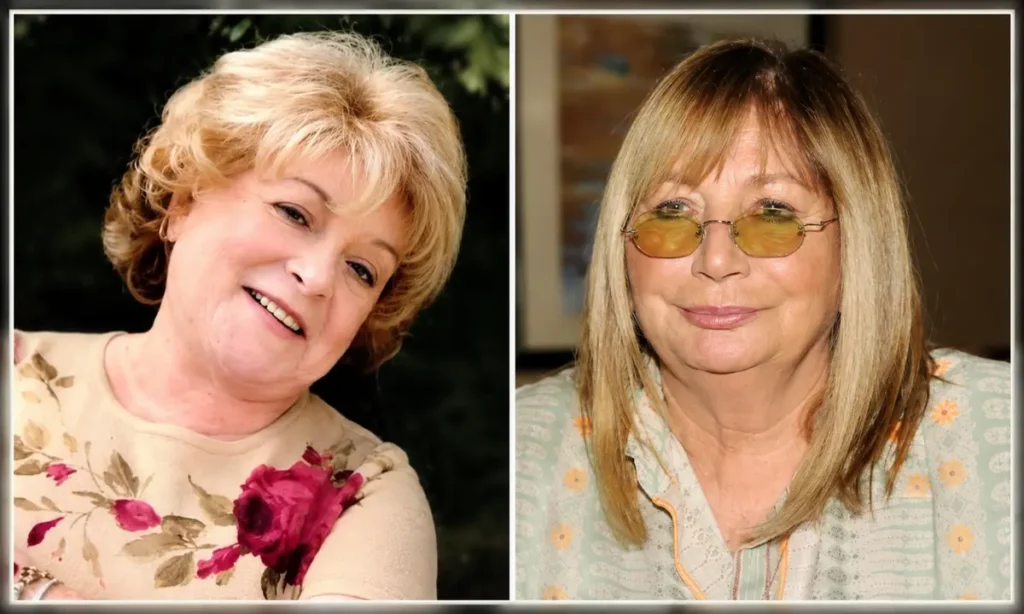

For many readers, the name Cynthia Palmer is most immediately associated with actress Winona Ryder. But Palmer’s own story reaches far beyond Hollywood family connections. A writer, photographer, editor and archivist, she became part of a small San Francisco intellectual circle that worked to preserve literature and historical material surrounding psychoactive drugs and visionary culture. Her work helped create an important archive at a time when such subjects were often treated more as scandal than scholarship.
That dual identity—as a mother within a famous artistic family and as an independent cultural researcher—makes Palmer an unusual figure in the history of American counterculture. Her contribution was not primarily about celebrity. It was about collecting, editing and preserving material that she believed deserved to survive.
Who Is Cynthia Palmer?
Cynthia Palmer was born on 10 August 1940, according to Purdue University Archives and Special Collections, which maintains records connected with her papers. The university identifies her as a writer and photographer originally from San Francisco and notes her role in founding the Fitz Hugh Ludlow Memorial Library.
Cynthia Palmer also became known for her editorial work. Alongside Michael Horowitz, she co-edited books examining psychedelic experiences and the history of drug culture, including Moksha: Writings on Visionary Experience and Psychedelics and Shaman Woman, Mainline Lady: Women’s Writings on the Drug Experience.
Her work developed during an era when discussions about LSD, marijuana and other psychoactive substances were closely connected to debates about politics, spirituality, literature and personal freedom.
Rather than approaching the subject solely through contemporary opinion, Palmer and her collaborators became collectors of historical material—books, writings, artwork and other documents that could help future generations understand how societies had viewed altered states of consciousness.
The Fitz Hugh Ludlow Memorial Library
One of the most significant chapters in Palmer’s career was her involvement with the Fitz Hugh Ludlow Memorial Library.
Cynthia Palmer, Michael Horowitz, William Dailey, and Robert Barker established the library in San Francisco in 1970 by combining their private collections. It was named after Fitz Hugh Ludlow, the 19th-century American writer whose The Hasheesh Eater became an early landmark in American literature about psychoactive substances.
The project grew from what initially might have seemed like an eccentric collecting hobby into a much broader historical archive.
Over subsequent decades, the collection developed into an important repository of literature and cultural material relating to psychoactive drugs. A contemporary account described the library as eventually becoming one of the world’s largest collections devoted to drug history.
Why the library mattered
The collection’s importance was not simply its size.
It reflected a broader intellectual argument: that the history of drugs should be studied through literature, art, anthropology, medicine, religion and personal testimony rather than reduced to legal or moral debates.
That distinction is important when considering Palmer’s legacy.
At a time when public discussion was often divided between enthusiastic advocates and strong opponents of drug use, archivists such as Palmer helped preserve primary material that historians and researchers could later examine.
The collection eventually became part of the Ludlow-Santo Domingo Library. Purdue’s archival records note that Julio Mario Santo Domingo Braga later acquired the original library.
Shaman Woman, Mainline Lady and the Question of Women’s Voices
Cynthia Palmer’s most visible publishing contribution came through Shaman Woman, Mainline Lady: Women’s Writings on the Drug Experience, first published in 1982 by William Morrow.
Library records identify Cynthia Palmer and Horowitz as the book’s authors/editors, with the original edition running 285 pages.
The book mattered because it focused on women’s experiences and writings in a field where male voices had historically dominated.
That emphasis became even more relevant with time.
In a later interview, Cynthia Palmer discussed how difficult it was to publish such material in the early 1980s. Cynthia Palmer described the project as running against the prevailing cultural mood of the Reagan era, when prohibition and campaigns against drug use increasingly shaped public discussions about drugs.
The book was later expanded and republished as Sisters of the Extreme: Women’s Writings on the Drug Experience.
A historical document rather than a simple endorsement
It is important to distinguish documenting drug experiences from promoting drug use.
Palmer’s editorial work brought together historical and literary accounts that could be examined from multiple perspectives. The project reflected an attempt to broaden the historical record, particularly by preserving women’s voices that might otherwise have remained scattered or overlooked.
That approach has helped keep the books relevant to discussions about gender, literature, cultural history and changing attitudes toward psychoactive substances.
Cynthia Palmer and Michael Horowitz
Cynthia Palmer’s professional life was closely connected with Michael Horowitz, the historian, writer, collector and archivist with whom she collaborated for decades.
Purdue’s archival records describe Horowitz as an historian and collector who worked with Timothy Leary as an archivist before helping create the Fitz Hugh Ludlow Memorial Library. The same records identify Palmer and Horowitz as co-editors of several major works.
Their partnership combined collecting with publishing.
Horowitz’s archival interests and Palmer’s writing and photographic background created a division of expertise that let the pair work across books, historical documents, and visual culture.
The relationship also shaped the unusual intellectual environment in which their children were raised.
The Mother of Winona Ryder
Cynthia Palmer became widely recognisable to the general public primarily because of her daughter, actress Winona Ryder.
Ryder was born Winona Laura Horowitz in 1971 and is the daughter of Palmer and Michael Horowitz. Biographical sources describe Palmer as an author, video producer and editor, while Horowitz was an author, publisher, editor, bookseller and archivist.
The family’s environment was far removed from a conventional Hollywood upbringing.
Ryder spent part of her childhood in Northern California, including time in a communal setting. Accounts of her early life describe a household surrounded by books, artists and writers, with Palmer and Horowitz maintaining strong connections to the literary and countercultural communities of the period.
Ryder has spoken positively about the unusual environment in which she was raised. In an interview reported by Parade, she described her parents as deeply connected. She recalled a childhood influenced by writers and cultural figures including Allen Ginsberg, Lawrence Ferlinghetti and Timothy Leary.
How Palmer’s Work Influenced Her Family
It would be too simplistic to claim that Palmer’s career directly created Winona Ryder’s acting career.
Ryder developed her own artistic identity and professional path.
But the cultural environment surrounding her childhood clearly provided an unusual foundation. Film screenings, books, photography, writing, and unconventional living arrangements were part of the world she grew up in.
One particularly memorable element of Ryder’s childhood was her exposure to cinema outside mainstream entertainment. Accounts of her upbringing describe her mother’s interest in film and the family’s practice of screening movies, experiences that contributed to Ryder’s early fascination with acting and filmmaking.
In that sense, Palmer’s influence can be viewed less as a direct career instruction and more as part of an intellectual and artistic ecosystem.
Palmer’s Broader Cultural Significance
The renewed interest in Cynthia Palmer reflects a larger shift in how cultural history is understood.
For decades, many counterculture figures were remembered primarily through their most famous associations. Palmer could easily have been reduced to a single description: Winona Ryder’s mother.
That description, however, leaves out much of her documented professional life.
Purdue University’s archival records preserve evidence of Palmer’s own activities, including her writing, photography and role in establishing an important specialised library.
Her publishing history provides another measure of her independent contribution.
Among the clearest examples are:
- Co-founding the Fitz Hugh Ludlow Memorial Library.
- Co-editing Moksha with Michael Horowitz.
- Editing Shaman Woman, Mainline Lady.
- Working as a writer and photographer.
- Helping preserve historical material concerning psychoactive culture.
- Participating in a broader intellectual movement examining women’s experiences with drugs.
These achievements place Palmer within a small but influential network of archivists and cultural historians who helped preserve material that might otherwise have disappeared.
Why Her Story Is Receiving Attention Again
Cynthia Palmer’s renewed visibility is partly connected to continuing public interest in Winona Ryder and her unconventional childhood.
But there is also a wider reason.
Academic and cultural institutions increasingly examine archival collections from the 1960s, 1970s and 1980s to understand how attitudes toward drugs, gender, art and personal freedom developed.
Material once dismissed as fringe culture can now provide researchers with valuable evidence about social change.
The history of the Fitz Hugh Ludlow collection illustrates that transition. What began as a private San Francisco collection ultimately became part of a larger international archival legacy. Purdue University now holds papers associated with Palmer and Horowitz that document part of that history.
What Comes Next for Palmer’s Legacy?
Cynthia Palmer’s future significance is unlikely to depend on conventional celebrity coverage.
Instead, her legacy may continue through archives, libraries, researchers and readers interested in the history of counterculture.
Three areas are particularly important:
- Archival preservation: Personal papers and historical collections can provide researchers with material unavailable through mainstream accounts.
- Women’s cultural history: Palmer’s editorial work offers a record of women’s experiences in a field traditionally dominated by male writers.
- Changing drug narratives: Her work provides historical context for understanding how public attitudes toward psychoactive substances have changed over several generations.
Continuing to preserve and digitise such material could make Palmer’s contributions more accessible to researchers who never encountered the original publications.
Continue exploring our website for more compelling biographies, cultural insights, and carefully researched stories that go beyond the headlines: TimeUpdate
A Legacy Larger Than Celebrity
Cynthia Palmer’s story sits at the intersection of several histories: the rise of San Francisco’s counterculture, the preservation of psychedelic literature, the changing representation of women’s experiences and the unconventional upbringing of one of Hollywood’s most recognisable actresses.
Her connection to Winona Ryder naturally attracts public attention. Yet the archival record suggests that Palmer’s importance does not depend on her daughter’s fame.
Cynthia Palmer helped build institutions, preserve documents and publish material at a time when the subjects she studied were often treated with suspicion rather than historical curiosity.
That makes her story more complicated—and more interesting—than a conventional celebrity-family biography.
Ultimately, Cynthia Palmer represents a quieter kind of cultural influence. Her name may be less familiar than those of the artists and celebrities who emerged from the world around her, but the records she helped preserve offer a window into a period when writers, archivists and artists were questioning established ideas about consciousness, gender and society.
As historians continue revisiting the cultural movements of the late 20th century, the question is not simply what people like Palmer believed. It is what they chose to preserve—and what those preserved voices can still tell us about a changing America.