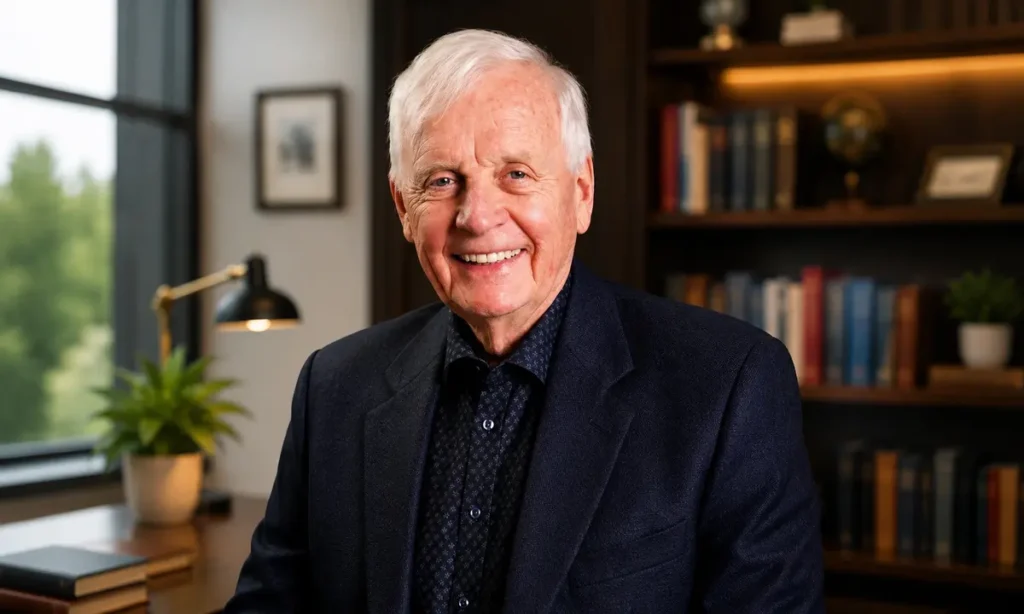

J Patrick Boyer has spent much of his professional life examining how Canadian society is governed. A lawyer, former member of Parliament, journalist and prolific author, Boyer developed a career that moved between politics and historical research. His books have explored elections, referendums, political parties, leadership, law and the people behind Canada’s institutional history.
What makes Boyer’s career particularly interesting is how these fields overlap. His experience inside Parliament informed his later writing, while his background in law and history gave him a broader framework for understanding political institutions. Together, those experiences created a body of work focused on one enduring question: how does democracy actually function when political ideals meet real institutions and real people?
From education and law to public life
J Patrick Boyer’s professional journey began with an academic foundation in economics and political science. He later pursued legal education and developed an interest in Canadian history, combining disciplines that would eventually define much of his career.
Before entering federal politics, he worked as a journalist and practiced law. Journalism exposed him to public affairs and the mechanics of political reporting, while legal practice gave him practical knowledge of institutions, legislation, and the justice system.
That combination would become important later.
Many political writers approach government primarily as observers. Boyer had the opportunity to experience it from inside Parliament before writing extensively about its institutions. His later books consequently reflected both historical research and first-hand experience.
Entering the House of Commons
Boyer entered electoral politics as a member of Canada’s Progressive Conservative Party.
J. Patrick Boyer was elected to the House of Commons representing Etobicoke—Lakeshore in 1984 and retained the seat in the 1988 federal election. His parliamentary years coincided with substantial change in Canadian politics and international affairs.
The Progressive Conservative government of the era faced questions involving economic policy, constitutional issues, foreign affairs and Canada’s changing relationship with the international community.
For Boyer, parliamentary service provided a close view of the difference between political promises and the practical responsibilities of government.
Parliamentary responsibilities
Boyer’s work extended beyond constituency politics.
J. Patrick Boyer served as parliamentary secretary for External Affairs and later held a parliamentary secretary role connected with National Defence. These responsibilities placed him at the center of key foreign-policy and security discussions during the final years of the Cold War and the period around the Gulf War.
The timing was significant.
The international political landscape was changing rapidly. The Cold War was ending, the Soviet Union was collapsing, and conflicts in the Middle East showed how quickly international events could affect Canadian policy.
These experiences gave Boyer a practical understanding of leadership and government decision-making that would later influence his writing.
Democracy became a central theme
Democracy became a central theme.
Rather than focusing exclusively on political personalities, he has often examined the systems through which citizens participate in government. Elections, referendums, political parties and parliamentary procedures all appear throughout his work.
This interest is particularly visible in his writing about direct democracy.
Canada is primarily a representative democracy. Citizens elect members of Parliament and provincial legislatures, and those representatives make decisions on behalf of voters.
Referendums operate differently.
Instead of choosing representatives to make a particular decision, voters answer a specific political question themselves.
Why referendums matter
Supporters of referendums argue that they can give citizens a more direct role in major decisions.
A referendum can also provide governments with a clear indication of public sentiment on a controversial issue. In some circumstances, it may strengthen the perceived legitimacy of a major political decision.
But the system has limitations.
Complex policy questions do not always fit neatly into a yes-or-no format. Campaigns can also reduce complicated issues to simple messages, while disagreements may continue even after the voting ends.
J. Patrick Boyer’s work on Canadian referendums examines these tensions through a historical lens.
His books have considered ballot questions involving subjects such as prohibition, conscription, women’s rights, Indigenous affairs and other major social and political issues.
This historical perspective matters because it shows that direct democracy is not new in Canada. Different communities and governments have experimented with public votes for generations.
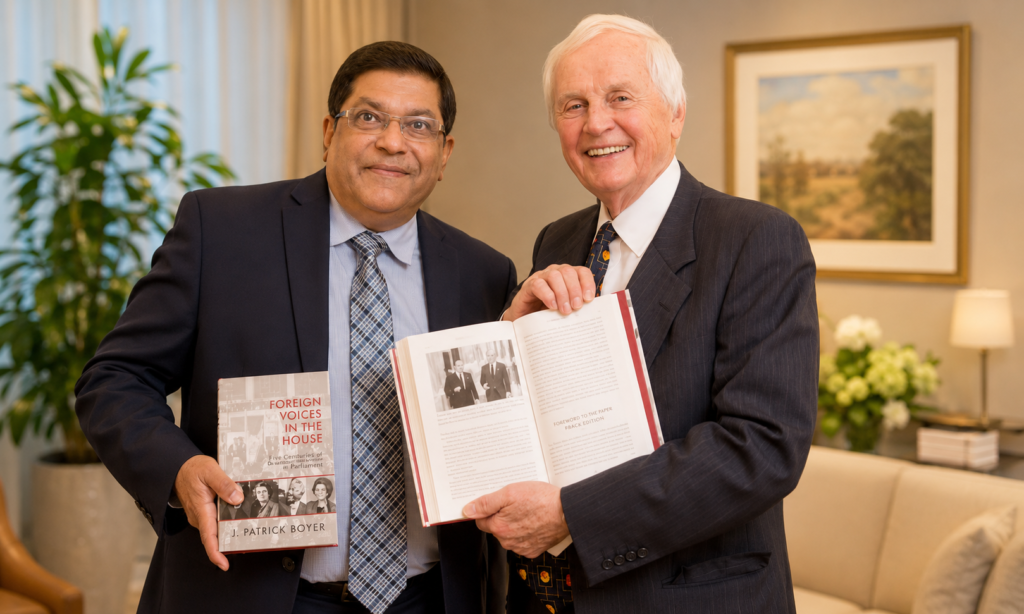
The People’s Mandate and political accountability
Another recurring theme in Boyer’s writing is the relationship between elected governments and the public.
J. Patrick Boyer’s book The People’s Mandate examines the meaning of electoral mandates and the expectations placed on governments after elections.
The issue is more complicated than simply asking which party won.
Winning an election gives a government political authority, but governments must still operate within constitutional limits, parliamentary procedures and public expectations.
The question of how much freedom a government should have after receiving an electoral mandate has been debated throughout Canadian political history.
Boyer’s work contributes to that discussion by examining the relationship between elections, representation and public consent.
Examining political parties from the inside
Boyer also turned his attention toward political campaign organizations.
His work on the Progressive Conservative Party’s famous “Big Blue Machine” explored how political organization helped shape electoral success.
The subject reveals an important part of modern democracy that voters do not always see.
An election campaign is not simply a contest between candidates.
Behind successful campaigns are large organizational structures involving:
- Fundraising
- Volunteer recruitment
- Polling
- Advertising
- Communications
- Candidate development
- Voter outreach
- Campaign strategy
J. Patrick Boyer’s examination of the Progressive Conservative organization helped document how professional political campaigning developed over several decades.
That history is especially interesting when compared with modern campaigns.
Today, political organizations use social media, digital advertising, online fundraising and sophisticated data analysis. Yet many basic campaign principles remain similar to those used decades ago.
Political organizations still need money, volunteers, recognizable candidates, effective messages and a strategy for persuading voters.
From politics to legal history
Boyer’s career did not end with political writing.
J. Patrick Boyer also became deeply involved in Canadian legal and social history.
One significant subject was James Chalmers McRuer, an influential Canadian judge linked to major developments in law and public institutions. Boyer’s work on McRuer explored the jurist’s career and his broader influence on Canadian legal thought.
This reflected another characteristic of Boyer’s writing: an interest in people whose professional lives reveal something larger about Canadian institutions.
Rather than treating law as a collection of statutes and court decisions, his historical work often places legal developments in their social context.
That approach helps readers understand why legal reforms happened and what they meant for ordinary Canadians.
Ordinary people as historical evidence
J. Patrick Boyer has also explored historical events through individual cases.
His work involving a nineteenth-century magistrate’s bench book, for example, uses local court records to examine everyday disputes and social conditions.
Such material can offer a different view of history than conventional political narratives.
National histories often concentrate on prime ministers, major elections, wars and constitutional crises.
Local legal records can reveal something else:
- How communities handled disputes
- How poverty affected individuals
- How families interacted with legal institutions
- How social attitudes changed
- How authorities dealt with everyday wrongdoing
- How ordinary citizens experienced the justice system
These details may appear small compared with major national events, but together they help historians reconstruct how people actually lived.
Family history and historical investigation
Boyer has also used family history as a vehicle for historical research.
His writing has explored complicated personal stories involving ancestry, identity, relationships and social expectations.
This kind of research demonstrates how private lives can intersect with larger historical developments.
A family dispute, for instance, can reveal attitudes toward marriage and social status. A court record can illuminate ideas about justice. Personal correspondence can show how people understood their circumstances.
For Boyer, history is therefore not limited to famous political figures.
It can also be found in documents created by people who never expected to enter the historical record.
A career crossing several disciplines
Boyer’s body of work is notable for its breadth.
His career has included several interconnected areas:
- Law — through legal practice and writing about Canadian justice.
- Politics — through parliamentary service and political analysis.
- Journalism — through his earlier professional work and interest in public affairs.
- History — through books examining people, institutions and events.
- Democratic studies — particularly elections, referendums and political participation.
These subjects may seem separate at first, but they share a common foundation.
All concern power, institutions, and the relationship between individuals and government.
Why Boyer’s work remains relevant
The political environment has changed considerably since Boyer entered Parliament.
Digital platforms now dominate political communication. Candidates can reach voters instantly, campaigns can raise money online, and political arguments can spread through social media within minutes.
Yet the fundamental questions remain remarkably familiar.
Who should make important decisions?
How much authority should elected governments exercise?
When should citizens vote directly on an issue?
What makes an election fair?
How should political parties operate?
What responsibilities accompany political power?
These questions have existed for generations, even though the technology surrounding them has changed.
Boyer’s historical approach is valuable partly because it demonstrates that many supposedly modern political debates have much older roots.
Different perspectives on his legacy
Supporters of Boyer’s work can point to the unusual combination of practical political experience and historical research.
He understands political institutions not only as a researcher but also as someone who participated in parliamentary government.
That experience provides useful insight, particularly when examining how political organizations and government actually operate.
At the same time, an insider perspective always requires careful historical examination.
Former politicians naturally bring their own experiences and interpretations to political history. That does not invalidate their work, but it makes evidence, documentation and multiple perspectives particularly important.
Boyer’s use of historical records, interviews, legal material and archival evidence forms an important part of his approach.
What his career says about Canadian democracy
Perhaps the most interesting aspect of Boyer’s career is its continuity.
His professional roles changed, but his central interest remained relatively consistent.
As a lawyer, he examined rules and institutions.
As a politician, he participated in representative government.
As a parliamentary secretary, he observed government decision-making more closely.
As a journalist and author, he investigated political organizations and public debates.
As a historian, he examined how institutions and individuals developed over time.
Each stage added another perspective.
That makes his career a useful case study in how political experience can evolve into historical inquiry.
The road ahead
The issues Boyer explored are unlikely to disappear.
Questions surrounding electoral reform, political accountability, citizen participation and the appropriate use of referendums continue to arise whenever Canadians debate the future of their democratic institutions.
Technology may change how citizens receive information, but it does not eliminate the underlying challenge of democratic government: translating millions of individual preferences into legitimate collective decisions.
That process will always involve compromise, disagreement and institutional rules.
Historical research can help by showing what happened when previous generations confronted similar problems.
Continue exploring our website for more compelling biographies, cultural insights, and carefully researched stories that go beyond the headlines: Timeupdate.co.uk
Conclusion
J. Patrick Boyer’s career represents an unusual intersection of law, politics, journalism and history.
His years in Parliament gave him first-hand experience of representative government. At the same time, his later writing allowed him to examine elections, referendums, political parties, legal institutions and historical personalities from a broader perspective.
The lasting significance of his work lies not simply in the political positions he encountered during his career, but in the larger questions surrounding them.
Democracy depends on institutions, but people ultimately shape institutions. Elections determine who receives authority, laws establish boundaries for that authority, and history records how those systems evolve.
Boyer’s career illustrates how those elements can intersect across a lifetime of public work.
As Canadian democracy continues to adapt to changing technology, political expectations and social pressures, the questions he examined remain remarkably current. The challenge for future generations will be determining not only how citizens should participate in democracy, but how effectively institutions can continue to represent them.