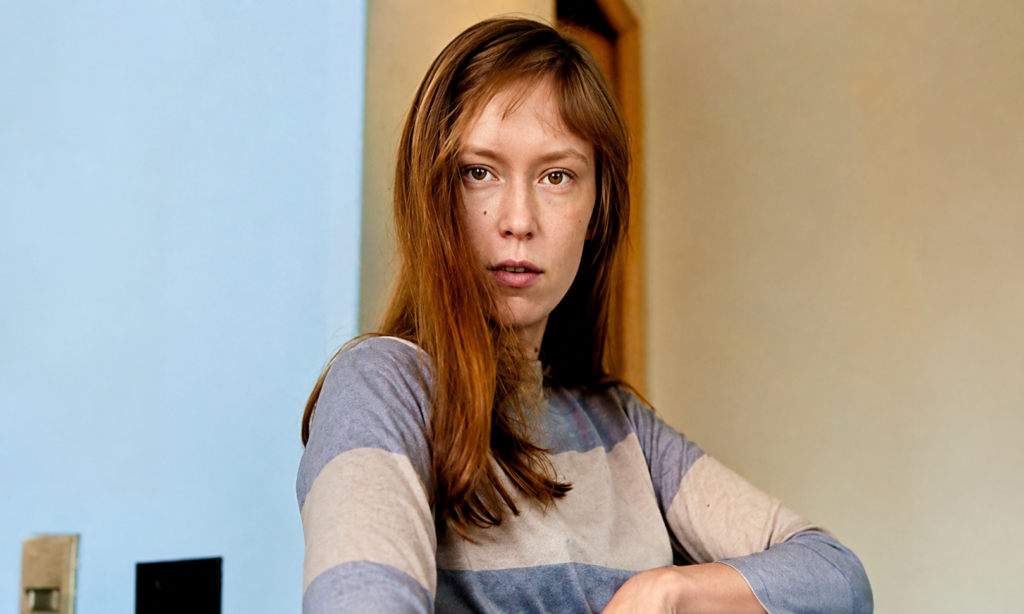

For years, Peggy Reavey could easily have been remembered primarily as a footnote in the early life of filmmaker David Lynch. She was his first wife, appeared in some of his earliest experimental films, and shared the uncertainty of his formative years. But that description leaves out the more enduring story. Reavey eventually developed a singular voice as a painter—one shaped by memory, storytelling, family mythology, and questions about what people hide from one another.
Peggy Reavey’s career is notable precisely because it did not follow a straight line. She studied art, moved into illustration and writing, raised a family, earned an advanced degree in creative writing, and ultimately returned to painting. Her mature work draws on personal memories, family stories, religious imagery, childhood psychology, and historical events. This understanding offers a fuller picture of an artist whose work has increasingly attracted attention on its own terms.
More Than a Connection to David Lynch
Peggy Reavey was born Margaret Vosburgh Lentz in 1947 and studied at the Pennsylvania Academy of the Fine Arts in Philadelphia during the 1960s. There she met David Lynch, whom she later married.
The couple had one daughter, Jennifer Lynch, who would herself become a filmmaker and writer. Reavey and Lynch eventually divorced during the 1970s.
Lynch’s later career made their early relationship an interesting part of film history. He became internationally known for works such as Eraserhead, Blue Velvet, Twin Peaks, and Mulholland Drive. Reavey, meanwhile, followed a quieter and more independent creative path.
That contrast has sometimes caused her own career to be overlooked.
Reavey participated in Lynch’s early experimental filmmaking and appeared in Eraserhead, giving her a place in the history surrounding one of American cinema’s most distinctive directors. But her later development as a painter cannot simply be explained through that relationship.
Her artistic interests evolved independently, particularly around questions of memory, identity, morality, and storytelling.
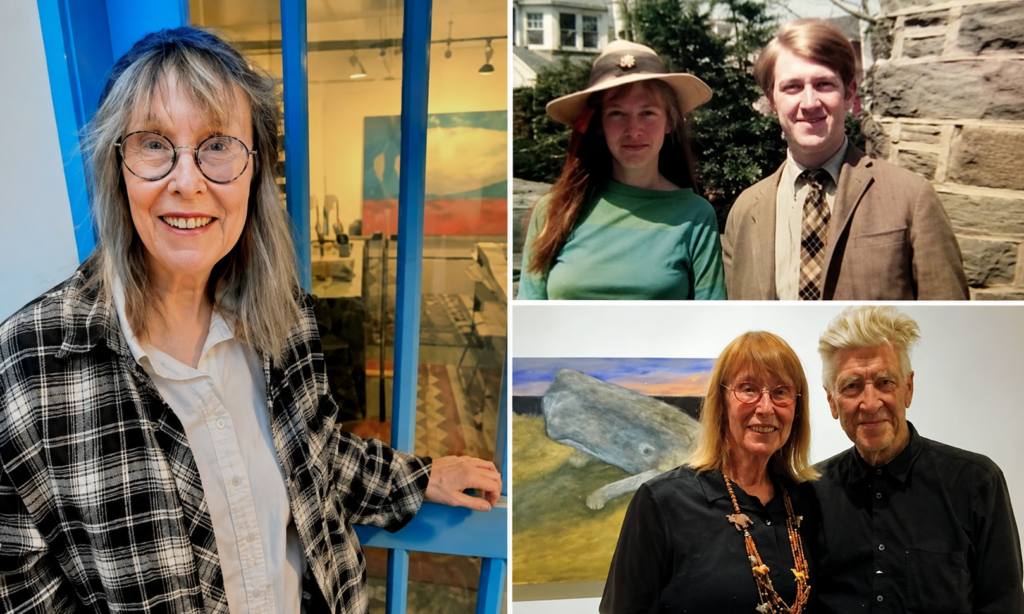
A Long Route Back to the Canvas
Reavey’s professional life did not follow the conventional image of an artist who spends decades moving steadily from art school to galleries.
After studying art, she worked in illustration and writing. She also became a mother and spent significant periods away from the conventional art-world environment.
That distance eventually became productive.
Reavey earned an MFA in creative writing from the University of California, Irvine, in 1987. Writing gave her another way to think about characters, conflict, memory, and narrative structure.
At one point, she began writing a novel about a woman painter. But as the project developed, the paintings described in the fictional story became more interesting to her than the novel itself.
That realization helped guide her back toward visual art.
The return was not simply a retreat to something familiar. Instead, she brought the lessons of writing with her.
Her paintings became increasingly concerned with narrative: not merely what an image looks like, but what might have happened before it and what might happen afterward.
Finding a Personal Language
Reavey’s mature paintings are primarily figurative and narrative.
People and animals frequently occupy scenes that appear recognizable but contain unexplained details. The viewer may understand the setting without immediately understanding the story.
That uncertainty is intentional.
Her paintings often encourage questions such as:
- What happened before this moment?
- What is the character thinking?
- Is the scene humorous, disturbing, or both?
- Who is innocent?
- Who is responsible?
- How reliable is the story being presented?
Rather than providing straightforward answers, Reavey creates visual situations that invite interpretation.
This approach gives her work a literary quality without turning the paintings into illustrations.
The “Good Girl” and the “Bad Girl”
One recurring idea in Peggy Reavey’s work is the divide between socially acceptable behavior and the impulses people keep hidden.
She has discussed childhood experiences involving a “good” self and a more rebellious or mischievous self.
That childhood distinction became more than a personal memory.
In her paintings, Reavey often explores the tension between how people appear and what may exist beneath the surface.
The idea is familiar in psychology and literature, but Reavey approaches it visually.
A seemingly innocent character can become unsettling. A morally questionable figure can appear sympathetic. Religious symbols can suggest virtue while the surrounding story raises doubts.
The result is an art that resists easy categorization.
Family History Becomes Artistic Material
Reavey’s interest in morality is also closely connected to family history.
One of the most striking examples involves her great-grandfather, Reverend George Vosburgh, who was accused in the late 19th century of poisoning his wife.
He was tried for attempted murder in 1878, acquitted, and later left the area.
The story became material for Reavey’s artistic exploration of guilt, innocence, reputation, and historical memory.
In one of her paintings, Vosburgh appears with a halo.
The image immediately creates a contradiction.
A halo traditionally represents holiness, but placing it around a man linked to a disturbing historical accusation raises a more complicated question: How is virtue established, and who gets to define it?
That tension marks Peggy Reavey’s approach.
She does not simply reproduce family history. She transforms it into a visual investigation of uncertainty.
Myth, Religion and Everyday Life
Religious imagery appears repeatedly throughout Reavey’s work, although her paintings are not easily described as traditional religious art.
Biblical stories provide frameworks for thinking about human behavior.
The same is true of family anecdotes and childhood experiences. Something small and personal can become a larger meditation on fear, desire, guilt, honesty, or responsibility.
This mix of the ordinary and the symbolic is one reason her paintings can feel both intimate and strange.
A viewer may recognize the emotional situation even when the precise story remains unclear.
The San Pedro Chapter
California’s San Pedro community has played an important role in Peggy Reavey’s artistic development.
She moved to San Pedro in 1987 and became associated with its local creative community. The harbor district offered a different environment from Los Angeles’ commercial center.
San Pedro’s mixture of cultures, working-class history, architecture, and independent artistic activity became part of the environment in which Reavey continued developing her practice.
Her work has appeared in exhibitions and artist-run spaces connected with the area.
That local context is important because Peggy Reavey’s career has not been built exclusively around the major commercial galleries of New York or Los Angeles.
Instead, much of her work has developed through smaller exhibitions, community networks, and independent art spaces.
For an artist interested in personal stories and overlooked histories, that setting has been particularly fitting.
From Early Exhibitions to Recent Recognition
Peggy Reavey’s career includes several significant exhibitions that demonstrate how her ideas developed over time.
One important exhibition, I Can’t Eggsplane: Peggy Reavey, presented a substantial selection of her work and emphasized themes including childhood, domestic life, fear, truth, love, and the body.
Another later exhibition, The Vosburgh Poisoning Case and Other Sins, focused heavily on the artist’s family history and the complicated relationship between historical fact and personal interpretation.
More recent work has continued this exploration.
The exhibition Gyrle, Recent Paintings by Peggy Reavey, presented her newer paintings and demonstrated that the artist’s interest in narrative and contradiction remains active decades after she first began working professionally.
Rather than abandoning earlier themes, Reavey has continued to reinterpret them.
The Lynch Connection Should Be Put in Perspective
The relationship between Reavey and David Lynch remains an unavoidable part of her biography.
She participated in some of Lynch’s earliest creative experiments and appeared in his early films. Her experiences during that period offer an unusual perspective on the filmmaker before he became internationally famous.
But biography can sometimes become a trap.
When an artist is connected to a famous figure, public attention can focus heavily on that association. As a result, the artist’s own work becomes secondary.
Reavey’s career deserves a different reading.
She did not create her mature paintings as an extension of Lynch’s filmmaking. They emerged from her own experiences and interests, including writing, motherhood, family history, childhood memories, and her long engagement with figurative painting.
The distinction matters.
Lynch’s work is primarily cinematic and collaborative, while Peggy Reavey’s mature practice is centered on the solitary process of constructing a painted image.
The two creative careers intersect historically, but they should not be treated as the same artistic story.
Why Her Work Continues to Attract Attention
Figurative painting has experienced renewed interest in contemporary art, but Reavey’s work occupies an unusual position within the field.
Her paintings are accessible enough to invite immediate recognition, yet complicated enough to resist quick interpretation.
That combination gives them longevity.
The viewer may first notice a person, animal, room, or recognizable situation. A closer look can reveal religious references, unusual expressions, hidden relationships, or contradictions within the scene.
The paintings therefore operate on several levels.
They can be read as personal stories, fictional narratives, historical reflections, or psychological studies.
A Different Kind of Artistic Career
Peggy Reavey’s career also provides an interesting example of how artistic development does not always happen in a straight line.
Her path included:
- Formal art education.
- Work in illustration and related creative fields.
- Writing and advanced study.
- Years shaped by family and everyday responsibilities.
- A renewed commitment to painting.
- Increasing recognition through exhibitions and independent art spaces.
That trajectory challenges the assumption that an artist’s most important work must happen early in life.
For Reavey, maturity appears to have expanded rather than narrowed the subjects she could explore.
What Could Come Next?
Predicting an individual artist’s future reputation is difficult.
Still, several developments could shape how audiences understand Reavey’s work in the coming years.
In the short term, renewed interest in the artistic circles surrounding David Lynch may introduce her work to audiences who previously knew her only through her connection to the filmmaker.
At the same time, exhibitions devoted specifically to her paintings can help shift attention toward her independent achievements.
Over the longer term, Reavey may receive greater recognition within discussions of American figurative and narrative painting.
Time may actually help that reassessment.
As the cultural focus moves beyond individual celebrity biographies, there is more opportunity to examine the creative contributions of people who occupied the same artistic environments but followed their own paths.
Peggy Reavey’s career is particularly interesting because it demonstrates how an artist can remain productive and intellectually engaged without becoming a conventional art-world celebrity.
Conclusion: A Career Built on Contradiction
Peggy Reavey’s story is ultimately more complicated—and more interesting—than her association with David Lynch suggests.
Her early connection to one of America’s most influential filmmakers provides historical context, but it does not explain the paintings she created later.
Those paintings emerged from decades of experience and reflection.
They draw from childhood, family history, religion, literature, memory, gender, morality, and the strange distance between how people present themselves and what they may conceal.
Perhaps that is the most consistent quality of Reavey’s work: she refuses to make human behavior simpler than it really is.
Her paintings leave room for innocence and wrongdoing, humor and discomfort, memory and invention to exist simultaneously.
As renewed attention brings her work to new audiences, the larger question is no longer simply how Peggy Reavey fits into David Lynch’s story.
It is how her own body of work should be understood within the broader history of American narrative painting—and what other overlooked artistic stories might still be waiting to be reconsidered.