
The internet regularly introduces unfamiliar names that quickly become search topics without developing a clear, universally accepted meaning. Nionenad is one such example. The name appears in connection with online publishing, technology content, and discussions surrounding the electric vehicle industry, leaving some readers uncertain about what it actually represents.
Unlike established technology brands with well-documented histories, Nionenad has a limited public record explaining its origins. Its meaning therefore depends largely on the context in which it appears. The most useful approach is to examine its identifiable online uses, distinguish confirmed information from unverified claims, and consider why names like this can attract attention in an increasingly crowded digital environment.
What Is Nionenad?
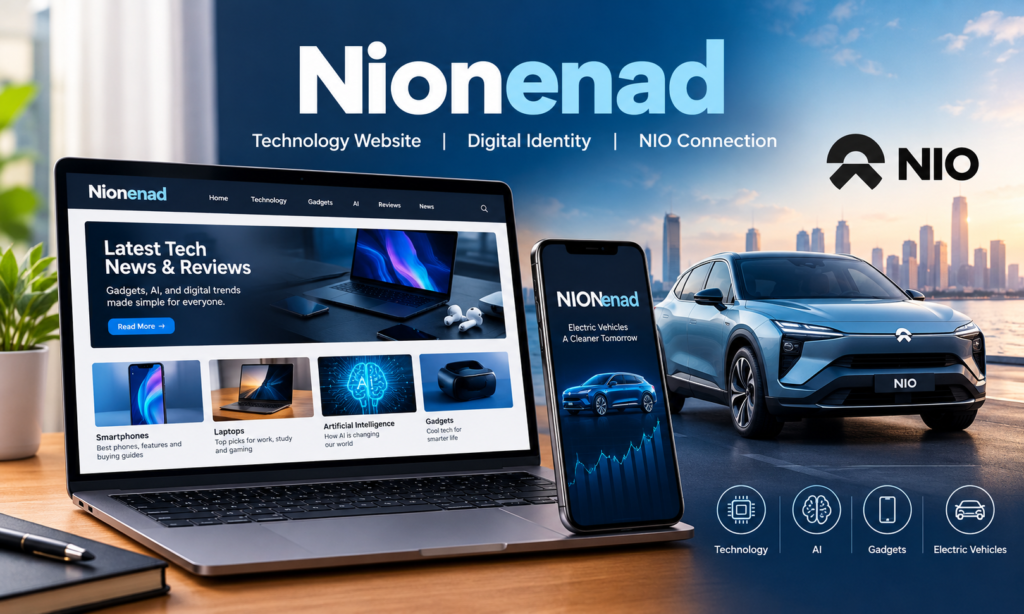
Nionenad is best understood as an online name rather than an established English word with a universally recognized definition. Its most visible website-related use is Nionenad.com, which presents itself as a digital publication covering technology, gadgets, artificial intelligence, consumer electronics, and related subjects.
The name also appears in a different context as NIONenad, an online identity associated with commentary about NIO Inc., a Chinese electric vehicle manufacturer. Although the names look similar, the available public information does not establish that these two uses belong to the same person, business, or organization.
This distinction matters because search results can bring together unrelated websites, individuals, and articles simply because they contain the same keyword.
Several online publications have attempted to describe Nionenad as a new concept, philosophy, or digital mindset. However, no reliable evidence establishes a single official definition or documented origin for those interpretations.
For now, the strongest approach is to treat Nionenad as a name with multiple online uses rather than a formally established technology concept.
The Background and Digital Development of Nionenad
The Emergence of a Distinctive Online Name
The precise origin of the name Nionenad remains unclear. Publicly available information does not provide a definitive explanation of who first coined it, what inspired the name, or whether it was originally created for a particular commercial purpose.
That uncertainty is not unusual on the internet. Many websites and social media accounts begin with distinctive names chosen for branding, memorability, or username availability. Over time, these names can become associated with different subjects as content is published and shared.
However, the appearance of a name across several websites does not necessarily mean it has become a recognized concept. Establishing its history requires evidence from original sources, documented statements, and independently verifiable records.
The Development of Nionenad.com
Nionenad.com describes itself as a website intended to make technology easier for everyday readers to understand. Its stated areas of interest include smartphones, consumer electronics, artificial intelligence, digital trends, and gadget-related information.
The website follows a familiar online publishing model. Rather than presenting itself primarily as a software application or downloadable technology product, it organizes information into articles and topic categories.
This format allows readers to explore subjects ranging from consumer technology to broader digital developments. It also places the website within a competitive publishing environment where clarity, accuracy, and consistent editorial standards are important.
Public information about the website’s founders, corporate ownership, and original launch plans remains limited. Consequently, claims about its early history or business structure should not be treated as confirmed without stronger documentation.
Nionenad.com and Its Focus on Technology
Technology publishing has become an important part of the online information economy. Consumers frequently search for explanations of unfamiliar devices, emerging software, artificial intelligence tools, and changes in the way digital services operate.
Nionenad.com positions itself within this broader environment by offering technology-oriented information for general readers.
Gadgets and Consumer Electronics
Consumer electronics remain a major area of interest for people comparing smartphones, personal devices, accessories, and connected products. Readers often want practical explanations rather than technical specifications alone.
A technology publication can help by explaining how a product works, identifying its intended audience, and outlining potential advantages and limitations.
For such content to be useful, however, product claims must be supported by reliable information. Specifications, compatibility, prices, and availability can change, making it important to distinguish current facts from general descriptions.
Artificial Intelligence and Digital Innovation
Artificial intelligence has expanded the range of topics covered by technology publishers. AI-powered assistants, content-generation systems, automated business tools, and machine-learning applications have created new opportunities as well as questions about reliability and responsible use.
For general readers, the challenge is often understanding what a tool actually does rather than simply recognizing its name.
Publications covering these subjects can provide value when they explain capabilities in straightforward language, identify meaningful limitations, and avoid presenting experimental features as established solutions.
Nionenad.com’s stated technology focus places it within this wider information landscape. Its usefulness ultimately depends on the accuracy, depth, and timeliness of its individual articles.
Digital Trends and Everyday Applications
Technology affects daily life through online communication, shopping, education, entertainment, and work. As these services evolve, readers need accessible explanations of both their practical applications and their potential drawbacks.
A useful digital publication should help readers evaluate information rather than merely repeat promotional descriptions. Clear sourcing, transparent authorship, and updated material are important indicators of editorial quality.
These standards are particularly relevant when an article discusses cybersecurity, financial products, artificial intelligence, or other topics where misleading information can have real consequences.
Who Is NIONenad, and What Is the Connection to Electric Vehicles?
Another use of the name appears in online discussions about the electric vehicle industry.
Public online references associate the handle NIONenad with Nenad Markovic, an individual described in online coverage as a retail investor and content creator interested in NIO Inc. and the broader electric vehicle market.
The account has been associated with discussion of company developments, vehicle deliveries, business expansion, and investor sentiment. Such commentary belongs to a different category from the technology articles published by Nionenad.com.
Understanding the NIO Connection
NIO Inc. is a Chinese electric vehicle company known for its electric cars and battery-swapping approach. Its business developments can attract attention from consumers, industry observers, and investors interested in the global transition toward electric mobility.
Independent online commentators sometimes discuss these developments by interpreting company announcements, examining delivery figures, or expressing views about market prospects.
However, independent commentary should not be confused with official corporate communication. No reliable evidence establishes NIONenad as an official spokesperson for NIO, and the similar spelling of the names does not prove a corporate relationship with Nionenad.com.
Readers researching the company should distinguish personal opinions from verified company announcements and financial disclosures.
Why the Two Uses Are Easily Confused
The confusion is largely a result of spelling and search behavior. When two online identities use nearly identical names, search engines may display them together even when they serve different purposes.
Someone searching for Nionenad may therefore encounter technology articles, explanations of the name, and material about electric vehicle investments.
The solution is to examine the context of each result. References to gadgets and digital publishing generally point toward the website, while references to NIO, vehicle deliveries, or stock-market commentary relate to the separate online identity.
There is currently insufficient evidence to conclude that the two are connected through ownership or management.
Why Is There No Single Confirmed Meaning of Nionenad?
Names can acquire different interpretations when they circulate online without a clear original explanation.
In Nionenad’s case, some websites characterize the name as a coined word representing innovation, adaptability, creativity, or personal development. Others treat it as a brand or digital identity.
These descriptions may reflect individual interpretations, but they do not establish an accepted definition.
A credible explanation normally benefits from evidence such as an original statement by the name’s creator, an official company description, documented historical usage, or independent reporting that verifies the claim.
Without that evidence, confident explanations can create a misleading impression of certainty.
The distinction is important for readers and publishers alike: repetition across websites is not the same as independent verification. Several articles may repeat an unsupported interpretation without providing any additional evidence.
A more reliable account acknowledges uncertainty and explains what is actually known.
How Should Readers Evaluate Information About Nionenad?
When researching an unfamiliar online name, readers can use a few straightforward checks to assess the information they encounter.
- Identify the original source. Determine whether a claim comes from an official website, a named individual, a company announcement, or a third-party article.
- Check whether independent evidence exists. Multiple articles are more persuasive when they rely on different credible sources rather than repeating the same unsupported statement.
- Separate facts from interpretations. A website’s stated purpose can be documented, while claims about the deeper meaning of its name may remain speculative.
- Verify important claims through primary sources. Company information, investment-related statements, and technical specifications should be checked against relevant official records whenever possible.
- Consider the publication date. Websites can change their focus, and information that accurately described an online platform at one point may no longer reflect its current activities.
These steps are useful beyond Nionenad. They provide a practical framework for evaluating unfamiliar brands, trending search terms, and emerging online identities.
The Opportunities and Limitations of an Online Publishing Platform
A technology-oriented website can serve readers who want accessible explanations of subjects that might otherwise seem complicated. Articles about devices, software, and digital trends can help people begin their research and identify questions worth investigating further.
Nevertheless, a website’s stated mission does not automatically establish the quality of its reporting.
Readers should consider several factors when assessing an online publication:
- Accuracy: Are technical claims and factual statements supported by evidence?
- Transparency: Are authors, ownership details, and editorial responsibilities clearly identified?
- Timeliness: Are articles updated when important information changes?
- Independence: Are reviews and recommendations distinguishable from sponsored material?
- Depth: Does the content provide meaningful explanation rather than repeating general statements?
These criteria are particularly relevant in a digital publishing market where the volume of available information continues to grow.
For Nionenad.com, a fair assessment requires examining its actual articles and editorial practices rather than relying solely on its self-description or on assumptions associated with its name.
What Could Happen Next?
Nionenad’s future visibility will depend on how its different online uses develop.
For the website, consistent publishing, accurate information, and a recognizable editorial focus could help it establish a clearer identity among technology publications. Competition is substantial, however, and attracting attention is different from earning long-term reader trust.
For the separate NIONenad identity, continued interest would likely depend on developments in NIO, the electric vehicle industry, and the wider investment community. Commentary about individual companies can become more prominent during periods of major announcements, changing delivery figures, or shifts in market sentiment.
The broader meaning of the term may also evolve as more people encounter it. Yet any new interpretation would still need to be distinguished from documented facts about the existing website and social media identity.
In the short term, the most useful development would be greater clarity about the name’s origin and the relationships, if any, among its different uses. Over the longer term, its significance will depend on whether it becomes associated with a clearly defined organization, publication, or community.
Conclusion: A Name Still Taking Shape Online
Nionenad illustrates how a distinctive name can appear in multiple digital contexts before its meaning becomes clear. Its identifiable uses include a technology-focused publishing website and a separate online identity associated with discussion of electric vehicles and NIO Inc.
Although some websites attach broader philosophical or conceptual meanings to the term, those interpretations lack a clearly established, authoritative origin. Treating them as confirmed facts would go beyond the available evidence.
The larger lesson concerns the way online information develops. Search visibility can create the appearance of importance, but reliable understanding requires context, attribution, and verification.
As Nionenad continues to appear in search results, the key question is not simply how many websites mention the name. It is whether future evidence establishes a clearer origin, a more defined identity, and a meaningful distinction between what is documented and what remains speculation.
May you also like: Jennifer Sloan